Quick Summary: Prepare a rainy-day pickup kit before driving to get your new puppy in Oregon, since wet conditions can make the handoff tricky. Pack dry towels, a secure carrier, and a spare blanket, keeping the carrier inside the car until the handoff. Confirm the exact handoff point with Sage Puppies, have one adult hold an umbrella while another receives the puppy, and move quickly to the car. Once inside, dry the puppy’s paws, belly, and coat, then repeat the process when you arrive home, and watch for shivering that warrants a vet call.
A South Jordan family driving north for a Havanese, Havapoo, or Cavapoo may spend more time handling slick roads, a wet carrier, and a soggy blanket than the puppy handoff itself. Without a rain plan, a small puppy can get chilled fast.
This guide makes keeping puppy dry simple. You will learn which puppy rain gear earns space in the car, how to set up a dry ride home, and where dog raincoat sizing can go wrong for a young small-breed puppy.
Sage Puppies helps families prepare for thoughtful pickup and travel days. Pack the right puppy rain gear, keep transitions short, and give your new companion a calm, warm start.
Step 1: Confirm the Rain Plan Before You Leave
Check the Handoff Route, Not Just the Forecast
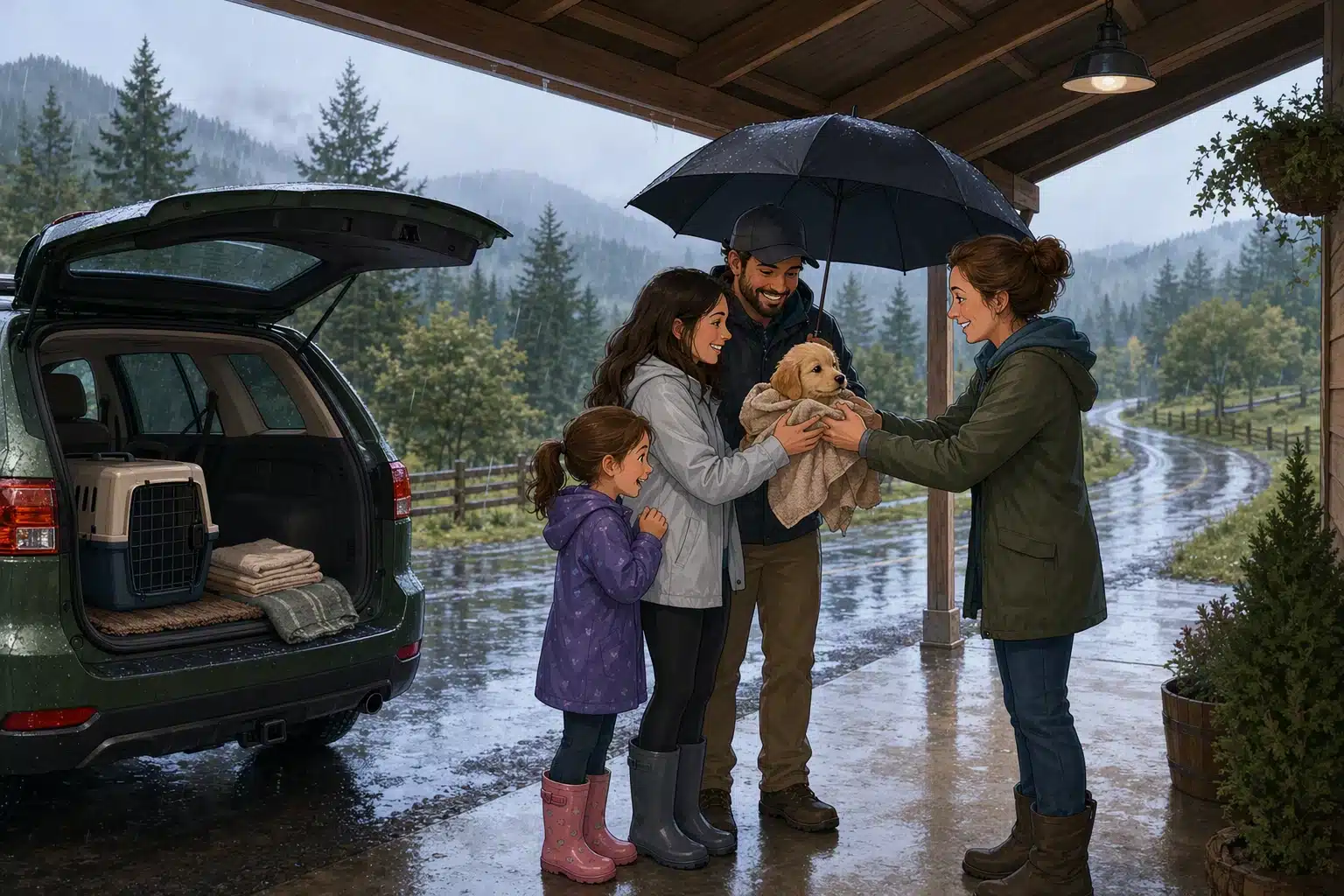
Text Sage Puppies before you leave to confirm the exact handoff point and whether it has cover. A rainy forecast alone does not tell you if you will walk across a wet lot, wait by the curb, or pull into a sheltered spot.
Ask three quick questions:
- Where should we park?
- Is there a covered handoff area?
- Who should we contact when we arrive?
Check your full route, too. The National Weather Service notes that wet roads can reduce visibility and become slick, so allow extra time and check current conditions before travel. Oregon travel guidance recommends using state road resources for actual road conditions.
| Check | Why it matters |
|---|---|
| Parking location | Limits your puppy’s time in rain |
| Covered entry | Keeps the handoff calm and dry |
| Arrival contact | Avoids waiting outdoors |
Keep the carrier inside the car until the puppy is ready to move. Open doors only when the handoff begins.
Know When to Ask About a Different Arrangement
Ask about a different time or sheltered plan if rain is heavy, winds are strong, or your route includes difficult roads. This is not being fussy. It is sensible planning for a small puppy and a safe drive home.
Contact Sage Puppies early if you expect:
- Flooded streets or poor visibility
- A long outdoor wait
- An icy mountain-pass route
- A delayed flight or rental-car issue
A change may be possible, but never assume it. Confirm the plan directly so the team can prepare and your puppy has a calm first transition.
Also Read: Oregon Puppies: Choosing Between Pickup and Home Delivery
Step 2: Pack a Rainy Pickup Kit for the Puppy and Car
Create a Dry Transfer Kit
Keep this kit by the passenger door, not buried in luggage. The goal is a quick, calm handoff from the pickup spot to the car.
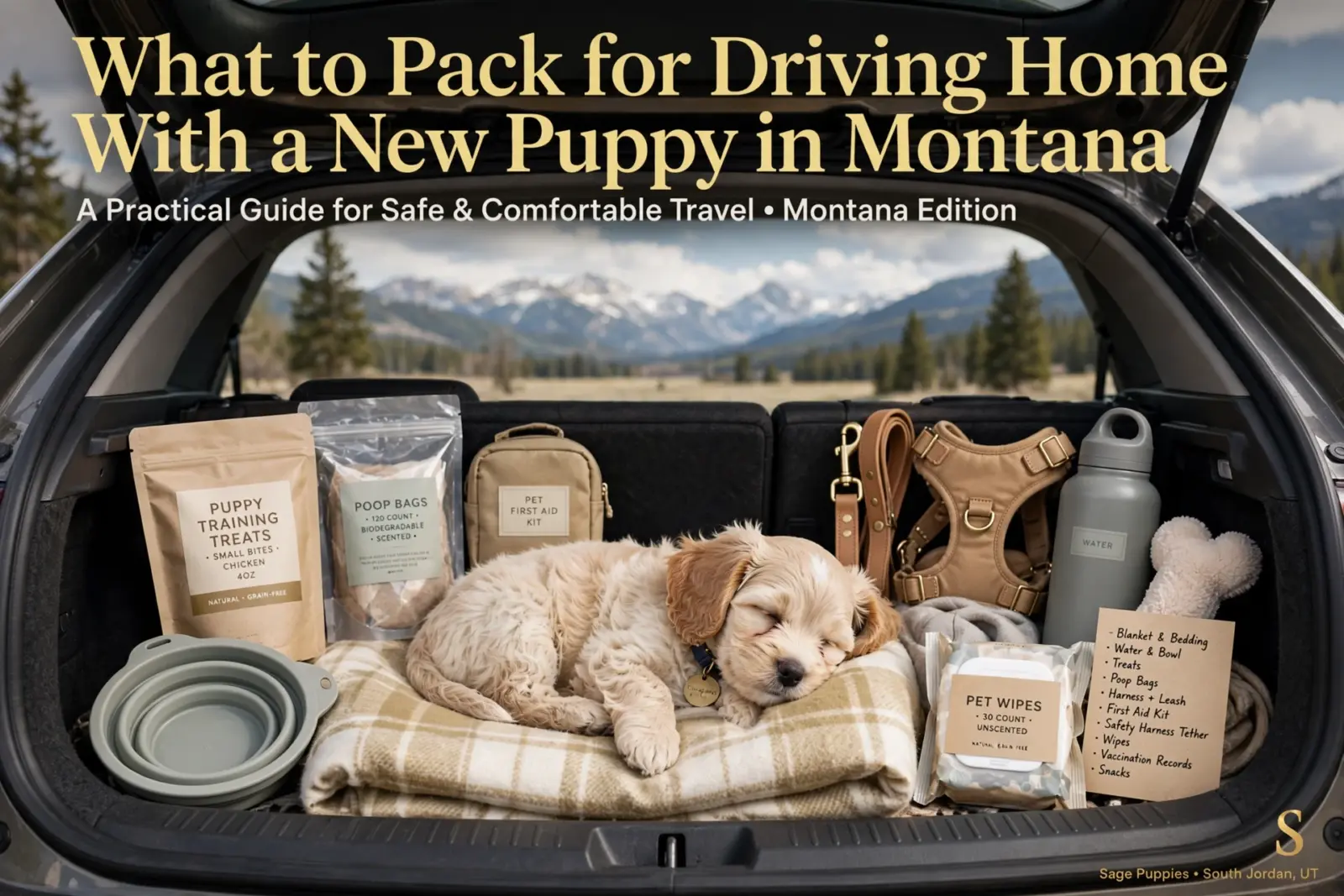
Pack:
- Two clean, absorbent towels
- A small fleece blanket
- Puppy-safe wipes for muddy paws
- A slip lead or harness only if advised for your puppy
- A waterproof bag for wet towels
- Paper towels and a spare seat cover
- A small bowl and water for the drive
Dry paws and the underside first, then wrap the puppy loosely in a towel for the short walk. Do not bundle their face or block airflow.
Tip: Bring one towel for the puppy and one for your hands. A slippery leash or carrier handle makes a rainy handoff harder.
Prepare the Vehicle Before the Puppy Arrives
Set up the car before you leave for pickup. Place a secured carrier or crate on a flat surface, lined with a towel and familiar-smelling blanket. The AVMA advises using a properly sized, secured carrier that lets a dog stand, turn, and lie down comfortably.
| Car area | Set it up this way | Why it helps |
|---|---|---|
| Carrier | Towel-lined and secured | Keeps the puppy warm and steady |
| Seats | Waterproof cover or old sheet | Protects upholstery from rain and accidents |
| Floor | Paper towels and wet bag nearby | Makes quick cleanup simple |
Keep the cabin comfortably warm, but never leave your puppy alone in the car. Drive straight to your next stop, especially after a wet Oregon pickup.
Also Read: 10 Signs a California Puppy Listing Is a Scam – Sage Puppies
Step 3: Choose and Test Puppy Rain Gear Before Pickup Day
Prioritize Coverage, Mobility, and Visibility
Choose a lightweight, waterproof coat that covers your puppy’s back and chest without blocking potty access. Skip bulky hoods and loose fabric around the legs. A small Havanese, Havapoo, or Cavapoo needs room to walk, sit, and be carried calmly.
Look for:
- Water-resistant outer fabric
- Adjustable belly and neck closures
- A leash opening that works with your harness
- Bright color or reflective trim for dim Oregon parking areas
- Smooth lining that will not mat damp hair
A well-fitted raincoat can keep a puppy more comfortable during wet potty stops, according to the American Kennel Club’s raincoat guide.
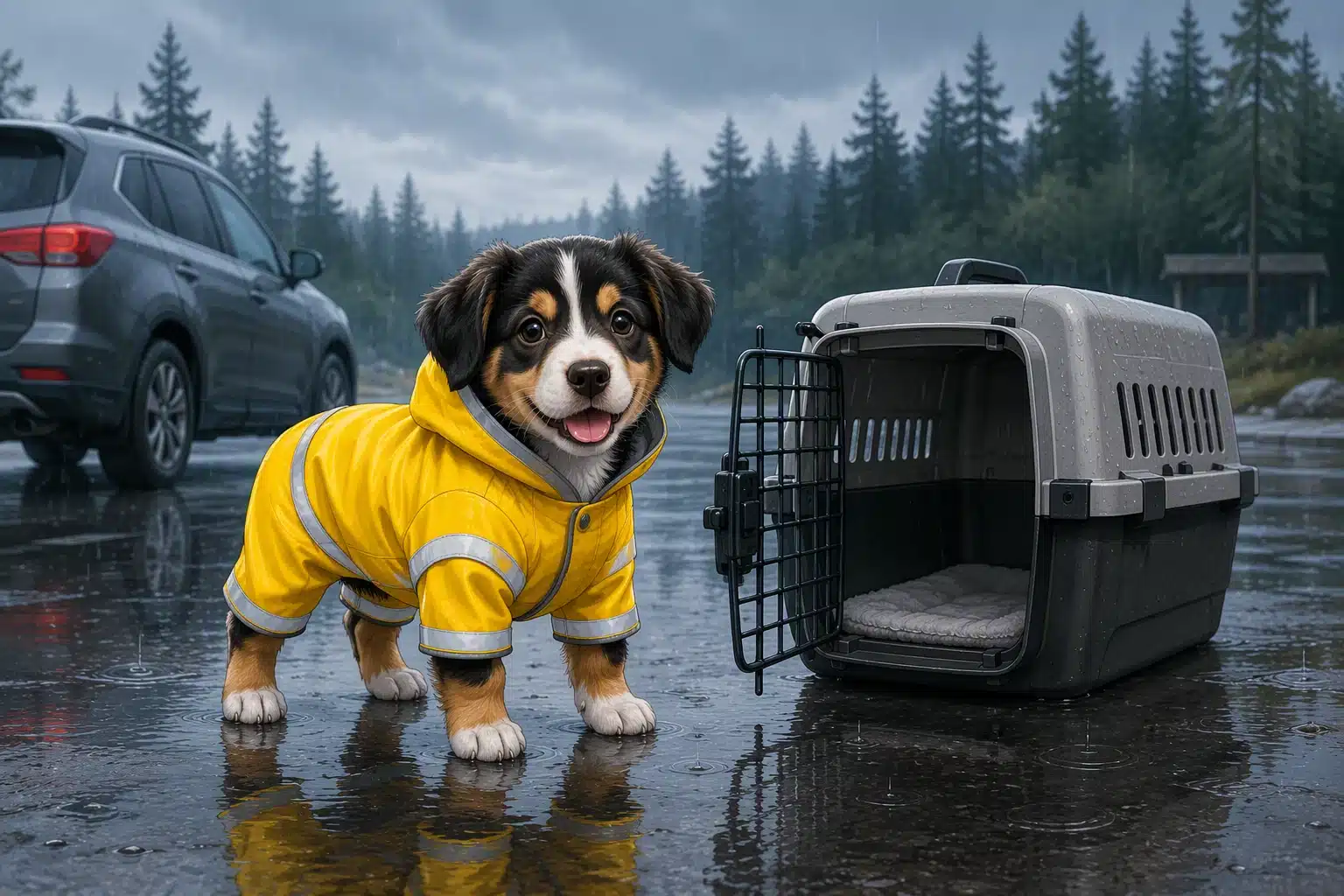
Do not leave rain gear on an unattended puppy in a crate or car. Straps can snag, and a wet coat can make your puppy chilly.
Use Measurements Instead of Breed or Weight Alone
Ask Sage Puppies for your puppy’s current measurements close to pickup day. Puppies grow fast, and the same weight can look very different across body types.
Measure while your puppy stands:
| Measurement | Where to measure | Why it matters |
|---|---|---|
| Back length | Base of neck to tail base | Prevents a coat that is too short |
| Chest girth | Widest point behind front legs | Sets the main coat size |
| Neck girth | Where a collar rests | Stops rubbing or slipping |
Check the brand’s size chart, not just its breed label. The AKC measuring guide notes that chest, neck, and back measurements give a safer fit than weight alone.
Before pickup, practice for a few minutes indoors with treats. Watch for normal movement:
- Let your puppy sniff the coat.
- Fasten it gently.
- Encourage a few steps and a sit.
- Remove it before your puppy gets frustrated.
Apply the Two-Finger Fit Check
Slide two fingers under the neck and belly straps. You should feel room without gaps.
- No room means the coat is too tight.
- Three or more fingers means it is too loose.
Recheck the fit after the first wet walk. Damp fabric and a wiggly puppy can change how the coat sits.
Step 4: Move the Puppy From Handoff to Carrier Without Getting Them Soaked
Set Up the Carrier Before Opening the Car Door
Put the carrier in place before the handoff starts. Open its top or side door, add a dry towel or washable pad, and keep the zipper or latch within reach.
A small puppy needs enough room to stand, turn, and lie down comfortably. AKC carrier guidance also recommends airflow and bedding that can be cleaned easily.
| Item | Where it goes | Why it helps |
|---|---|---|
| Dry towel | Inside carrier | Absorbs damp paws |
| Spare towel | Front seat | Quick wipe after transfer |
| Carrier | Rear seat or flat cargo area | Keeps the route short |
| Umbrella | Held by second adult | Creates a dry cover |
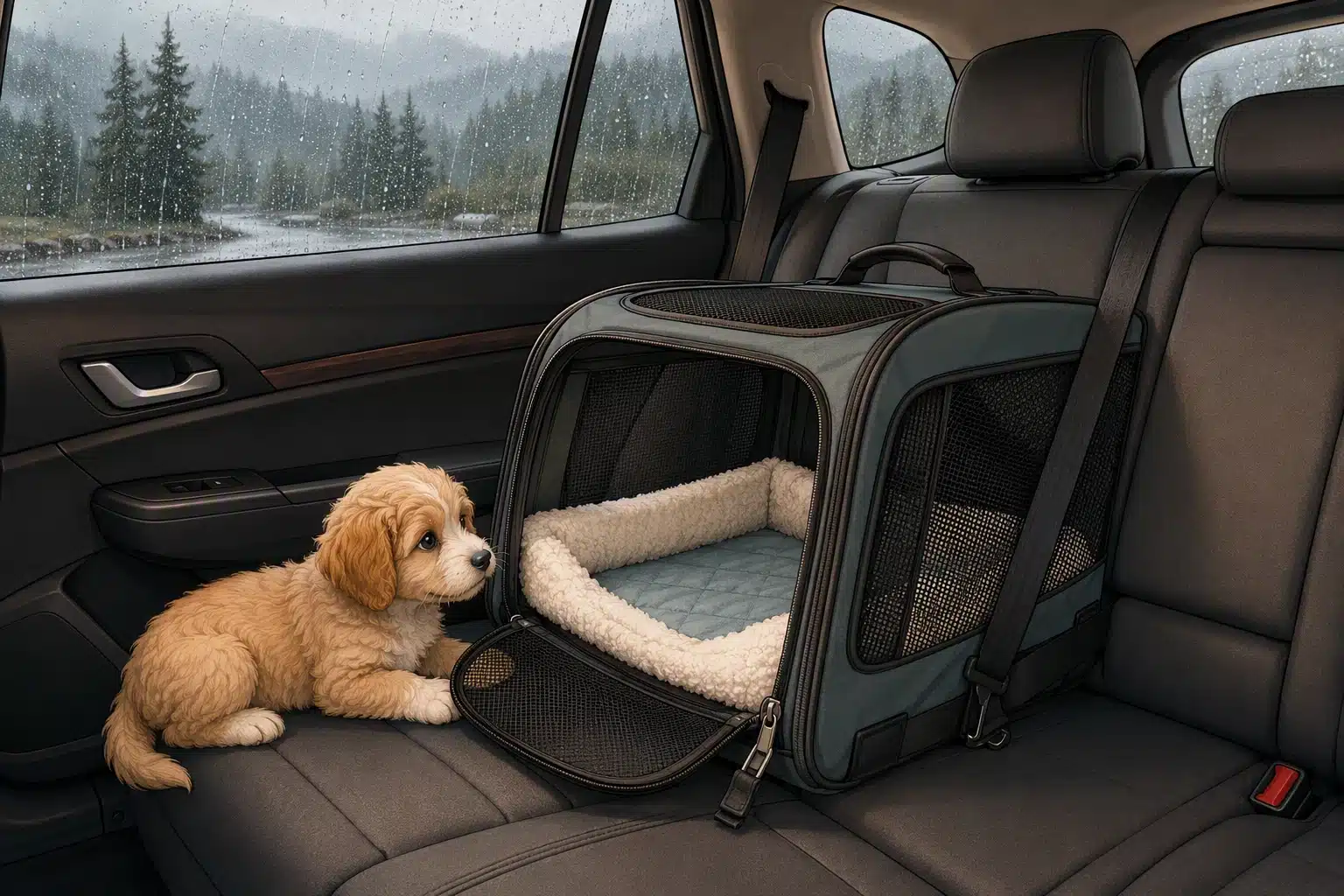
Tip: Do not set the carrier on wet pavement. Water can soak through the base and chill a small puppy.
Use a Short, Deliberate Transfer
Assign clear roles before the door opens:
- One adult holds the umbrella low over the handoff space.
- One adult receives the puppy with two secure hands.
- Walk straight to the open carrier. Do not pause for photos.
- Set the puppy inside, close the door, then dry any wet paws through the opening if needed.
Keep the puppy close to your chest. A loose puppy can wriggle, startle, or slip when rain and new sounds feel unfamiliar.
Secure the carrier before driving. Dogs should ride restrained in a crate or other safe restraint, not loose in the car, according to AKC car safety advice.
Also Read: 8 Seasonal Hazards Every New Puppy Owner Should Prepare For
Step 5: Dry the Puppy During and After the Rainy Car Ride
Do the First Drying Pass Before Driving
Do not start the drive with a damp puppy. Settle them in the carrier, then use a clean, absorbent towel to gently press moisture from the paws, belly, chest, and ears. Avoid hard rubbing, which can feel scary for a young puppy.
- Pat the coat dry from neck to tail.
- Check between toes and under the belly.
- Replace any wet carrier liner with a dry one.
Keep the carrier warm, dry, and well ventilated. A wet blanket or coat can make a puppy colder, and young dogs are more at risk in cold conditions. The American Veterinary Medical Association also advises against leaving pets unattended in cold cars.
| Item | Use during the ride |
|---|---|
| Two dry towels | First pass and backup |
| Spare liner | Swap out damp bedding |
| Unscented wipes | Clean muddy paws |
| Small trash bag | Hold wet towels separately |
Refresh the Carrier at Safe Stops
For longer trips, check your puppy only after you have parked safely. Keep the car doors closed as much as possible, especially in heavy Oregon rain.
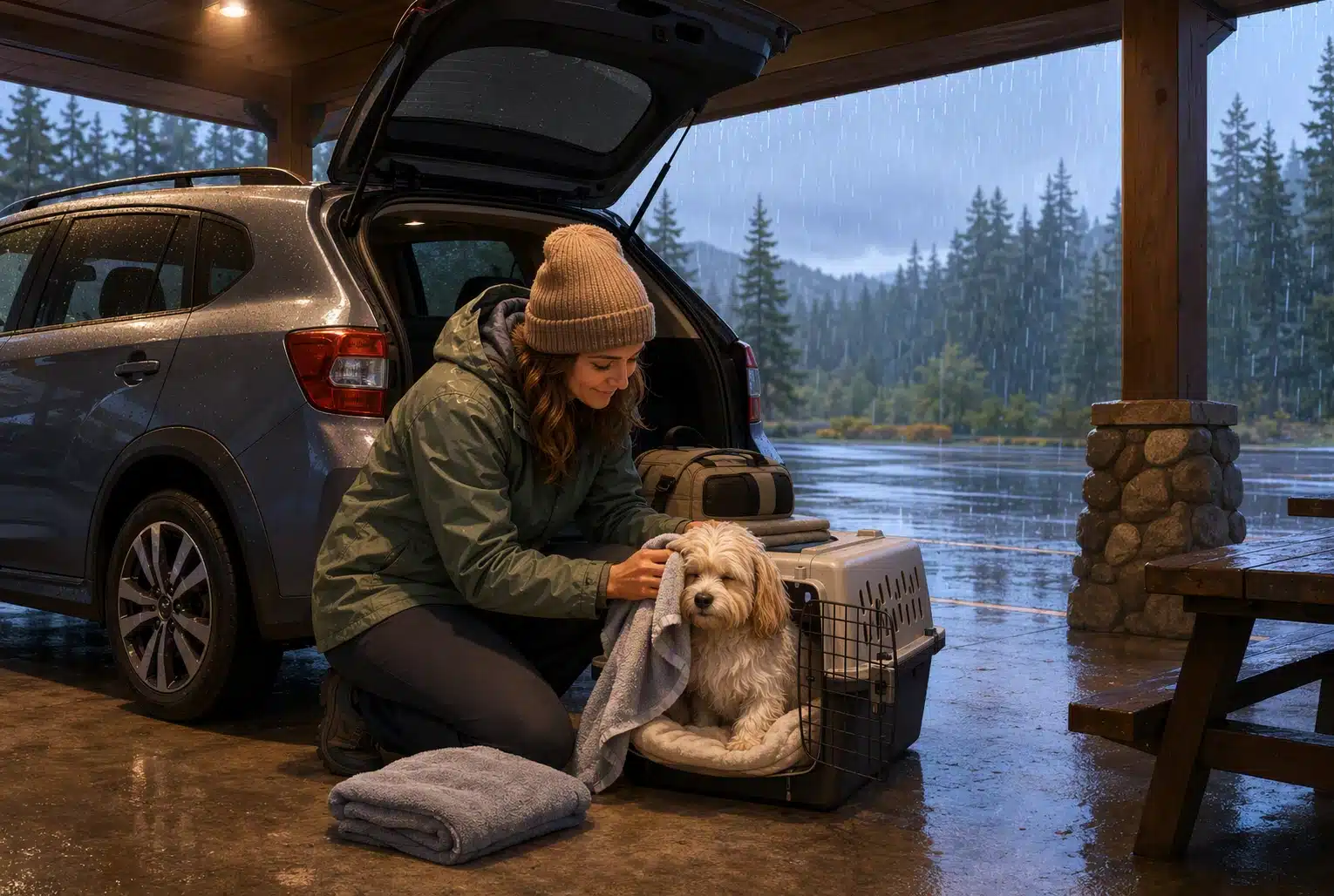
Look for damp bedding, wet paws, or shivering. Change the liner if it feels cool or soaked. Offer calm reassurance, then let the puppy rest again. Do not use a hair dryer in the car. The noise, heat, and moving air can overwhelm a new puppy.
Call a veterinarian if your puppy keeps shivering, seems unusually sleepy, or will not respond normally after being cold.
Finish Drying at Home
Carry the carrier straight into a warm, dry room. Close exterior doors before opening it, so your puppy does not face a new draft or escape risk.
Use this final routine:
- Towel-dry the coat, paws, and belly again.
- Check paws for grit or de-icer residue.
- Give your puppy a dry bed, water, and a quiet place to rest.
The AVMA recommends wiping a dog’s feet, legs, and belly after wet walks to remove possible chemicals they could lick off later. Keep the first evening simple. Your puppy has had a full day.
Also Read: Puppy Care Blog & Resources | Sage Puppies
Step 6: Protect the Puppy From Oregon Rain Hazards on the First Stop
Avoid Puddles, Runoff, and Unfamiliar Wet Ground
Choose a clean, paved spot with good drainage for your first stop. Keep your puppy away from puddles, roadside runoff, standing water, and soggy grass that you cannot check closely.
Water and wet soil can carry germs from animal urine. Oregon health officials note that leptospirosis can spread through contaminated water or moist soil, affecting both people and animals. Oregon Health Authority guidance supports taking a cautious approach.
Use this quick check:
- Park away from drains and deep puddles.
- Pick a bright, level area near the entrance.
- Carry your puppy across wet patches if needed.
- Wipe paws before returning to the car.
Tip: A short walk on clean pavement is safer than letting a young puppy explore a wet rest area.
Keep the First Outdoor Break Brief
Offer a calm potty chance, then head back inside. The goal is relief, not exercise or social time.
- Use a secure harness or collar and a short leash.
- Stand still for a few minutes in one dry spot.
- Praise quietly if your puppy goes.
- Towel-dry paws, belly, and chest before the ride resumes.
If your puppy does not go, do not wait in cold rain. Return to the warm vehicle and try again at the next planned stop.
Step 7: Use a Simple Arrival Routine Once You Reach Home
Dry, Inspect, and Settle
Bring your puppy straight inside and use a clean, absorbent towel to dry the paws, belly, chest, and ears. Check between the toes for grit, leaves, or road salt.
Offer a calm potty break in one clean, familiar spot, then lead them to their prepared sleep area. Keep greetings quiet. One or two family members is plenty at first.
| Check | What to Look For | Next Step |
|---|---|---|
| Coat and paws | Damp fur, debris, redness | Towel dry and gently wipe |
| Energy | Normal curiosity or unusual weakness | Let them rest and observe |
| Stomach | Vomiting or loose stool | Note the time and call if it continues |
A warm, quiet first evening helps a small puppy recover from travel and rain.
Record Questions for the Breeder or Veterinarian
Write down questions while details are fresh. Include feeding times, stool changes, sleep patterns, and any cough, discharge, or low appetite. Puppies need a vet-guided vaccine plan, and AVMA guidance recommends following your veterinarian’s schedule.
Call your veterinarian promptly for concerning changes. AVMA first-aid guidance notes that first aid does not replace veterinary care.
Also Read: Havanese, Havapoo & Cavapoo Puppy Care Blog
Common Mistakes to Avoid on a Rainy Puppy Pickup
Do Not Test New Gear for the First Time at the Handoff
Do not wait for the handoff to try a new raincoat, harness, or carrier. A puppy may freeze, wriggle, or chew at unfamiliar gear. Practice at home with the carrier buckled into the car. Check that towels, wipes, and a dry blanket are easy to reach.
A wet coat can make a small puppy colder. Bring a spare dry layer for the ride home.
Do Not Trade Safety for Speed
Rain can make families rush. Slow down instead. Carry your puppy straight into a secured carrier, not loose in your arms. The American Veterinary Medical Association recommends a properly sized, secured carrier or crate for vehicle travel.
- Do not leave your puppy alone in a cold car.
- Do not let them ride on a lap or roam the cabin.
- Do not use an open truck bed.
Dry paws, legs, and belly after the handoff, especially if they touched de-icer or road grime.

Plan a calm, dry homecoming with Sage Puppies. Our family-first team helps you prepare for a safe pickup or nationwide delivery, so your Havanese, Havapoo, or Cavapoo can settle in warm, clean, and comfortable from day one.
Frequently Asked Questions
Q1: How do I keep my puppy dry during a rainy pickup in Oregon?
Park close to the handoff point. Carry your puppy under a towel or small blanket, then place them in a dry crate or secured carrier. Keep the car warm, but not hot.
Q2: What should I bring to pick up a puppy in the rain?
Bring absorbent towels, a lined carrier, spare bedding, puppy-safe wipes, and a waterproof bag for wet items. Add a leash and harness only if your breeder advises using them.
Q3: How to dry a puppy after a rainy car ride?
Blot the coat with a clean towel. Dry paws, belly, ears, and tail area first. Replace damp bedding right away, then let your puppy rest somewhere warm and draft-free.
Q4: Can I use a hair dryer on my new puppy?
Avoid high heat and loud airflow. A towel is safest on pickup day. If needed, use a dryer on low, held far away, while watching for stress.
Q5: Should I cancel pickup if Oregon rain is heavy?
Ask about safe timing. Sage Puppies can help families plan a calm handoff. Delay travel if roads, visibility, or flooding make the trip unsafe.
Conclusion
A rainy Oregon pickup can still feel calm and safe. Pack dry towels, a secure carrier, and a warm vehicle before the handoff. Keep the walk from door to car short, then dry paws, belly, and coat as soon as you are inside.
Small, young puppies can chill fast. The American Veterinary Medical Association advises that wet clothing can make dogs colder and that young pets should not be left in cold cars.
Prioritize warmth, a quiet ride, and close supervision. A simple plan lets your new Havanese, Havapoo, or Cavapoo begin the trip home comfortable and secure.