How to Find a Reputable Puppy Breeder Online: 15 Signs to Look For
A professional website can make almost any puppy listing appear trustworthy. A reputable breeder, however, provides something more important: verifiable information, thoughtful care, clear policies, and a process designed to protect both the puppy and the family.
Health testingParent informationContracts and depositsScam red flags
A reputable breeder should provide information that can be reviewed and verified before you reserve a puppy.
Quick Answer
How do you find a reputable puppy breeder online?
Look for a breeder who is easy to identify, transparent about the puppy’s parents and environment, willing to discuss breed-appropriate health testing, and able to provide a written contract before accepting a deposit.
A reputable breeder should ask you questions, explain how puppies are raised, provide realistic expectations, and offer a clear pickup or delivery process. Be cautious when a seller rushes payment, avoids live communication, refuses to show records, or has numerous unrelated breeds continuously available.
Important distinction: Registration papers, an attractive website, social-media followers, or a low price do not prove that a breeder is ethical. These details may support credibility, but they cannot replace health information, transparency, documentation, and responsible puppy care.
The Complete Checklist
15 signs of a reputable puppy breeder online
No single sign proves that a breeder is responsible. Look for a consistent pattern across the breeder’s identity, health practices, puppy environment, paperwork, communication, and placement process.
1
Identity and transparency
Begin by confirming that the breeder and the puppies are real, consistent, and accessible.
A clear identity and location
A reputable breeder should provide a real business or personal identity, an established location, and reliable ways to communicate. The breeder does not need to publish a private home address, but you should understand where the program operates and who is responsible for the puppies.
Compare the name, telephone number, email address, website, social profiles, contracts, invoices, and payment instructions. Significant inconsistencies deserve further investigation.
Verify: Who owns the program, where it operates, and how the breeder can be reached.
A focused and consistent breeding program
Responsible breeders usually have a clear purpose and work with a limited number of breeds or carefully planned crosses. Their website, social media, parent information, and available-puppy listings should tell a consistent story.
Be cautious when a website offers many unrelated breeds, every color imaginable, or a constant supply of puppies with little information about the parents or breeding goals.
Verify: The breeds offered, the breeder’s goals, and whether the program information is consistent.
Current photos and videos of the puppy
A breeder should be able to provide recent photos or video that clearly show the puppy you are considering. The puppy’s appearance, age, sex, coat, and surroundings should remain consistent across the listing and direct communication.
Consider requesting a brief live video call or a new video containing a simple personalized detail. A reverse-image search can also help identify photographs copied from another website.
Verify: The puppy is real, currently in the breeder’s care, and accurately represented.
Open, direct communication
Reputable breeders generally welcome reasonable questions and can explain their program without relying on vague marketing language. Answers should be specific, consistent, and appropriate for the puppy’s age.
Communication does not need to be instantaneous, especially when someone is caring for puppies. It should, however, be organized, respectful, and responsive enough for you to make an informed decision.
Verify: The breeder can answer detailed questions by telephone, video, email, or another documented method.
2
Health, parents, and puppy development
Health claims should be supported by meaningful information rather than broad promises.
Breed-appropriate health testing
Health testing should focus on inherited concerns relevant to the breed or parent breeds. Ask which screenings were performed, which parents were tested, when testing occurred, and whether results can be reviewed.
A basic veterinary examination of the puppy is important, but it is not the same as evaluating breeding parents for inherited conditions. Ask the breeder to explain that distinction.
Verify: The tests performed, the tested parents, and documentation supporting the results.
Useful information about both parents
A breeder should be able to describe the parents’ size, age, breed, temperament, health history, and relationship to the litter. Photographs are helpful, but detailed information is more valuable than appearance alone.
When a parent lives with a guardian family or another responsible owner, the breeder should still be able to explain the arrangement and provide appropriate records.
Verify: Parent identities, temperaments, health information, and expected influence on the puppies.
A clean, appropriate puppy environment
Puppies should be raised in an environment that supports sanitation, safety, rest, interaction, and age-appropriate exploration. The setting does not need to resemble a commercial facility. Many excellent programs raise puppies in carefully managed home environments.
Ask to see where puppies sleep, play, eat, and interact. Look for clean bedding, secure spaces, suitable flooring, and puppies that appear comfortable and engaged.
Verify: The puppies’ actual living environment rather than staged portrait photographs alone.
An age-appropriate development plan
Reputable breeders intentionally introduce puppies to normal sounds, handling, surfaces, people, grooming foundations, brief separations, crates, and other developmentally appropriate experiences.
The breeder should explain what has been introduced without claiming that a very young puppy is completely trained. Honest descriptions distinguish early foundations from finished behavior.
Verify: What puppies experience each week and how the breeder avoids overwhelming them.
Organized parent, health, veterinary, and puppy-development information gives families something more reliable than general marketing claims.
3
Applications, payments, and written protection
A responsible placement process should protect the family, the breeder, and the puppy.
A thoughtful puppy application
A reputable breeder usually wants to understand your household, schedule, experience, preferences, and plans for the puppy. This does not need to feel invasive, but it should show that placement decisions involve more than accepting payment.
Be cautious when a seller shows no interest in where the puppy will live or whether the breed is appropriate for your family.
Verify: The breeder evaluates prospective homes and is willing to decline an unsuitable placement.
Clear pricing and reservation terms
Pricing, deposits, reservation priority, payment timing, included items, and refund rules should be explained before you commit. Ask what happens if a planned litter is delayed, a puppy is unavailable, or your circumstances change.
A deposit can be normal, but it should be connected to a written process and paid to the same person or business identified in the contract.
Verify: The total price, deposit amount, payment schedule, refund policy, and recipient identity.
A written contract provided in advance
Review the purchase agreement before sending a final payment. It should identify the breeder, buyer, puppy, purchase price, important health terms, responsibilities, and any return or rehoming provisions.
Read the entire agreement and ask questions about unclear provisions. Promises made in messages should also appear in the final written documents when they materially affect the transaction.
Verify: The contract matches the breeder, puppy, price, policies, and representations you were given.
Organized veterinary and puppy records
Families should receive an understandable record of veterinary care, vaccinations or preventives provided, deworming when applicable, identification information, feeding routines, and recommended next steps.
Records should match the puppy’s name or identifying details and should not contain unexplained alterations or conflicting dates.
Verify: What care was provided, by whom, and what your veterinarian should do after the puppy arrives.
4
Delivery, communication, and long-term responsibility
The breeder’s responsibility should not disappear once the deposit or final payment is received.
A safe pickup or delivery plan
Whether you pick up locally or receive your puppy through an arranged delivery, the process should explain timing, transportation, identification, handoff, payment, records, food, and communication.
Delivery should never be used to prevent you from verifying the breeder. Remote buyers should receive enough information to evaluate the program before transportation is scheduled.
Verify: Who transports the puppy, how the puppy travels, when the handoff occurs, and what you receive.
Communication before and after go-home day
Communication should continue after the reservation and through the puppy’s transition home. Families should know what is happening with the puppy, what preparations are required, and how to ask reasonable questions after placement.
Breeder support does not replace veterinary care or professional training, but it can provide helpful context about routines, feeding, temperament, adjustment, grooming, and early development.
Verify: The breeder has a defined communication and support process before and after handoff.
No pressure to make an immediate decision
A reputable breeder may have legitimate reservation deadlines, but should not rely on fear, threats, or artificial urgency to force payment. You should have a reasonable opportunity to review records, policies, and the contract.
A responsible breeder is also willing to say that a puppy, litter, or breed may not be the right fit for a particular household.
Verify: You can review the important information without being pressured to skip due diligence.
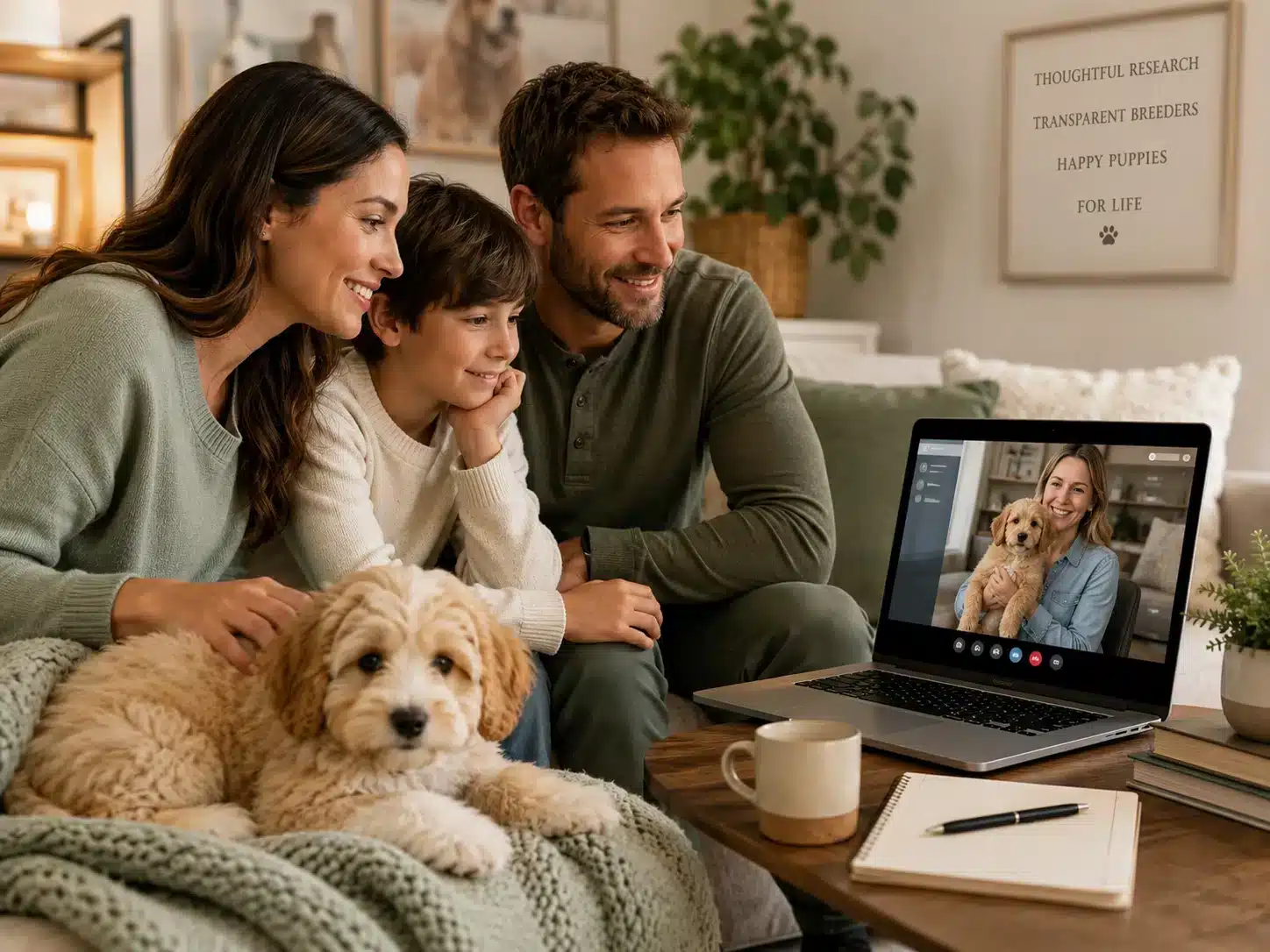
A live video conversation can help remote families confirm the puppy, ask questions, meet the breeder, and better understand the puppy’s environment.
Trust in Practice
How Sage Puppies approaches these trust factors
Sage Puppies focuses on Havanese, Havapoo, and Cavapoo puppies. Our program pages are designed to help families understand parent information, health testing, early development, reservation steps, and delivery before applying.
One unusual detail may have an innocent explanation. Several unresolved warning signs, especially involving identity, payment, or documentation, should cause you to pause the transaction.
The seller refuses telephone or live-video communication.
The same puppy photographs appear on unrelated websites.
The breeder’s name changes between the website, contract, invoice, and payment account.
Payment is demanded immediately through gift cards, cryptocurrency, wire transfer, or an unrelated recipient.
The seller cannot provide recent, personalized photos or videos.
Many unrelated breeds and ages are always available.
The breeder will not discuss the parents or provide meaningful health information.
There is no application, written contract, or review period.
The advertised price is dramatically below comparable responsibly raised puppies without a credible explanation.
The seller offers shipping immediately but provides no clear transportation or handoff details.
Reviews use repetitive language, generic names, or photographs unrelated to the program.
The breeder discourages you from speaking with your veterinarian or reviewing documents carefully.
Reputable breeder behavior compared with common red flags
Trust factor
Reputable breeder
Warning sign
Identity
Uses consistent names, contact details, contracts, and payment information.
Uses conflicting names or asks for payment to an unexplained third party.
Photos and video
Provides recent media and can verify the puppy through direct communication.
Uses only polished listing photos or refuses personalized updates.
Health information
Explains breed-appropriate testing and provides supporting documentation.
Makes broad health claims without records or meaningful details.
Parents
Provides parent identities, photographs, size, temperament, and health context.
Claims the parents are unavailable and provides no supporting information.
Application
Asks about the household and whether the puppy is a suitable match.
Approves every buyer immediately after receiving payment.
Contract
Provides written terms for review before final payment.
Relies on messages, verbal promises, or a document provided only after payment.
Delivery
Explains transportation, timing, safety, handoff, and required records.
Offers immediate shipping without confirming identity or logistics.
Communication
Answers questions consistently and allows reasonable time for review.
Creates panic, threatens to sell the puppy immediately, or avoids details.
Before Paying a Deposit
A practical breeder-verification process
Use these steps in order. The goal is not to interrogate a responsible breeder, but to confirm that the program, puppy, documents, and payment instructions all belong to the same legitimate transaction.
Confirm the breeder’s identity.Record the breeder’s full name, business name, location, telephone number, email address, and website.
Review the entire website.Compare the breed pages, parent information, program details, available puppies, policies, and contact information.
Speak directly with the breeder.Use a telephone or video conversation to ask about the puppy, parents, health practices, environment, and placement process.
Verify the puppy with current media.Request recent photos or video and compare distinguishing details with the listing.
Review parent and health information.Ask which parent screenings were completed and how the results relate to the planned litter.
Read the pricing and reservation policy.Confirm the total price, deposit, payment schedule, refund terms, reservation priority, and included items.
Read the contract before paying.Make sure names, puppy details, policies, health terms, and payment instructions match the information you received.
Confirm pickup or delivery.Know who will transport the puppy, how the puppy will travel, when the handoff occurs, and what documentation accompanies the puppy.
Save your records.Retain the listing, emails, messages, contract, invoice, payment confirmation, health records, and delivery information.
Frequently Asked Questions
Questions about finding a reputable breeder online
What questions should I ask an online puppy breeder?
Ask about the puppy’s parents, breed-appropriate health testing, veterinary care, living environment, early development, temperament, expected adult size, contract, deposit policy, go-home timing, pickup or delivery, and post-placement support.
How can I verify a breeder’s health-testing claims?
Ask which tests were completed, which parent was tested, when the testing occurred, and whether supporting documentation is available. Discuss the records with your veterinarian when you need help understanding what the results mean.
Should a reputable breeder always have puppies available?
Not necessarily. Responsible breeding is planned around suitable parents, health, timing, and the breeder’s ability to care for each litter. Some breeders have waiting periods, while others may occasionally have an available puppy because a family’s plans changed.
Can I safely buy a puppy without visiting in person?
It can be possible when the breeder provides strong verification, direct communication, current video, parent and health information, a written contract, references or reviews, and a clearly explained delivery process. Delivery should never replace careful breeder verification.
Are registration papers proof that a breeder is reputable?
No. Registration may document ancestry or eligibility within a registry, but it does not by itself prove appropriate health testing, good temperament, responsible puppy care, ethical placement, or honest business practices.
What is the biggest warning sign of a puppy scam?
The strongest warning pattern is pressure to send money before the seller verifies their identity, proves that the puppy is real, provides written terms, and explains how the puppy will safely reach you.
Wisely Bred. Beautifully Loved.
See how Sage Puppies approaches responsible puppy placement
Learn about our parent dogs, health-testing approach, early-development program, application process, reservation steps, and delivery or Utah pickup options.