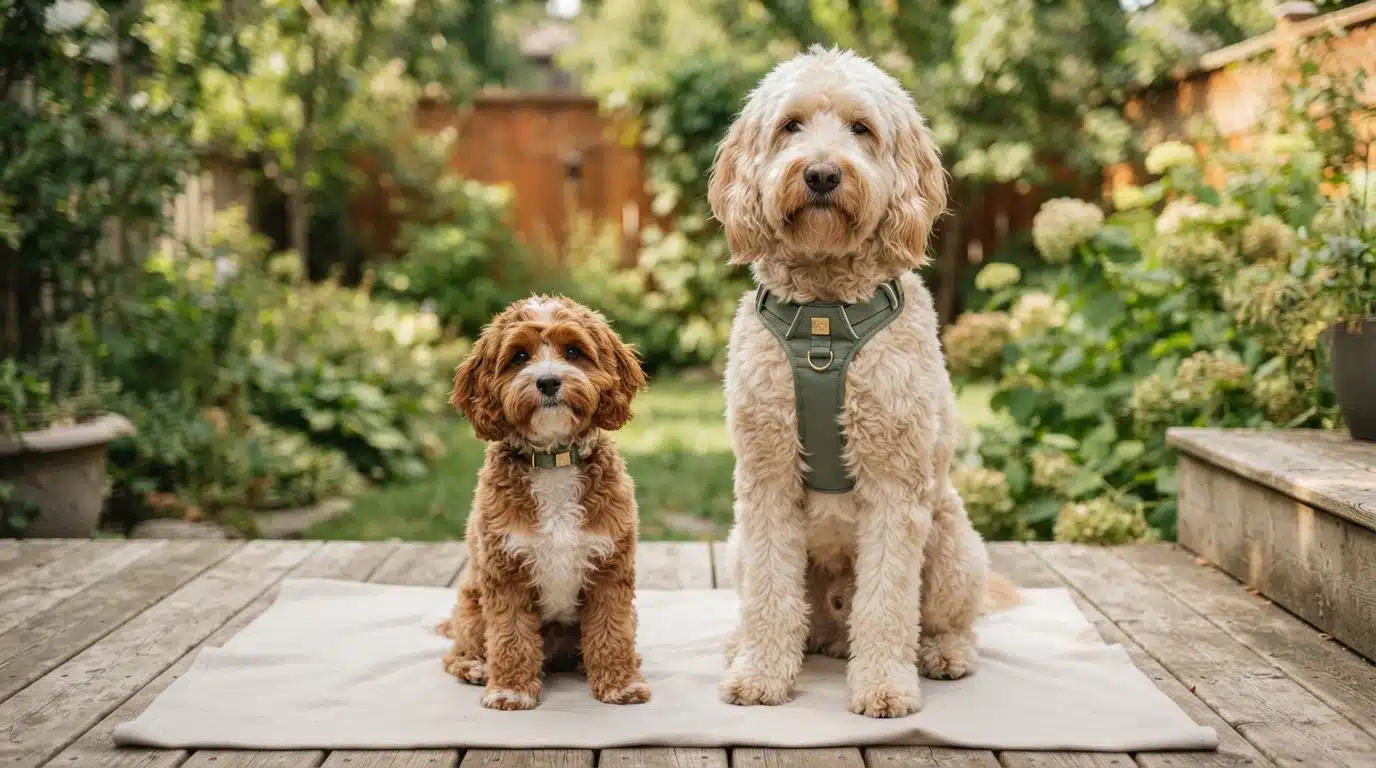
Quick answer: A Havapoo is a Havanese–Poodle mix within the broader category often called doodles. Compare the actual parents, size estimates, grooming needs and individual puppy’s behavior. Neither a Havapoo label nor another Poodle-cross label guarantees a safer, easier or more predictable family dog.
A Havapoo is itself a Poodle cross. Our complete Havapoo guide explains ancestry and variation; the Havapoo breed page covers Sage’s program and purchasing next steps.
Comparing a Havapoo with another Poodle cross starts with the parent breeds and the individual puppy. “Doodle” covers many pairings, so ask which cross is being discussed and compare adult-size estimates, exercise needs, grooming and temperament observations. Photos and labels cannot establish the best match.
Many parents, first-time owners, and allergy-aware homes ask the same thing: which puppy is safer, easier, and more realistic day to day? That is the right question, because the best dog for your home is not always the cutest one.
This guide compares Havapoo Puppies with the wider doodle group in the ways families actually care about most: size, shedding, grooming, training, health, and kid compatibility. I am taking a practical family-first view, using common breed traits and real ownership factors, so you can judge Family Puppy Breeds by fit, not hype.
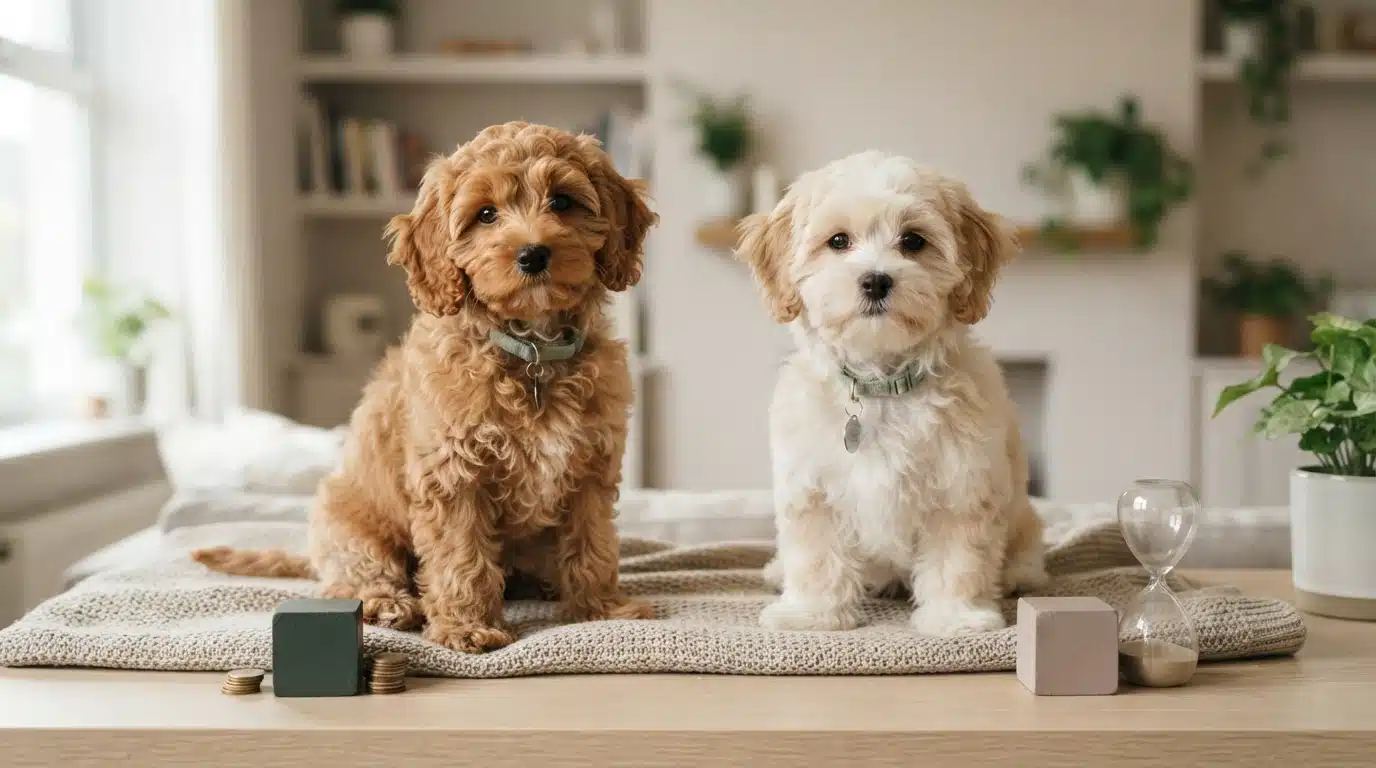
Havapoo Puppies vs Doodle Puppies: At a Glance
| Havapoo Puppies | Doodle Puppies | |
|---|---|---|
| Size and predictability | Small and fairly consistent | Ranges from toy to large and varies widely |
| Temperament with children | Gentle, social, and affectionate | Often friendly, but depends on mix and breeding |
| Shedding and allergy potential | Low-shedding, but not allergen-free | Usually low-shedding, not guaranteed |
| Grooming commitment | Regular brushing and professional trims | Can range from moderate to very high |
| Exercise needs | Moderate daily activity | Varies from moderate to high |
| Best family fit | Families wanting a small, manageable companion | Families wanting more choice and willing to manage variation |
How Havapoo Puppies and Doodle Puppies Compare
Havapoo Puppies
A Havapoo is a small Havanese-Poodle mix bred for close family life, easy handling, and a low-shedding coat that still needs steady grooming. Sources describe Havapoos as affectionate, social companion dogs with a fairly compact size range, which makes them a strong fit for families who want a more manageable puppy with a small companion profile.
Key strengths
- Small, fairly consistent size
- Gentle and affectionate with kids
- Moderate exercise needs
Doodle Puppies
Doodle puppies are a broad group of Poodle mixes, not one set type, so size, coat, and behavior can swing a lot by parent breed and generation. PetMD notes that doodles vary widely because there is no single breed standard, which suits families who want more options and can handle less predictability across Poodle mixes.
What Makes Havapoo Puppies Different from Other Doodle Puppies?
Havapoos stand out because their parent mix is narrower and easier to picture. A Havapoo blends a Havanese with a Poodle, so families start with one parent breed that is already very small, social, and bred for companionship. The Havanese breed standard places adults at 8.5 to 11.5 inches, with a friendly, playful temperament, according to the AKC Havanese standard. That matters because it often gives Havapoo families a more grounded size and personality range than doodles built from larger sporting breeds.
- Smaller starting point
- Companion-focused background
- Often easier for apartment life
- Usually less physical intensity than bigger doodles
A Havapoo is still a mixed breed, so no puppy is fully predictable. But the Havanese side often makes the range feel less wide.
The hard part with “doodle puppies” is that the label covers a huge spread. A doodle could mean mini, medium, or large mixes with very different energy, coat, and adult size outcomes. That broad category makes family decisions harder.
| Factor | Havapoo | Broad doodle category |
|---|---|---|
| Parent breed range | Havanese + Poodle | Many different breed mixes |
| Likely size band | Usually small | Small to very large |
| Home fit | Strong for apartments and suburbs | Depends heavily on mix |
| Predictability | More narrow, not guaranteed | Often much wider |
A Havanese is also known for doing well in urban or suburban homes and needing less space, as noted by WebMD’s breed overview. For many families, that makes a Havapoo the simpler, lower-risk choice.
Also Read: 7 Best Small Breed Puppies For Apartment Living In 2026
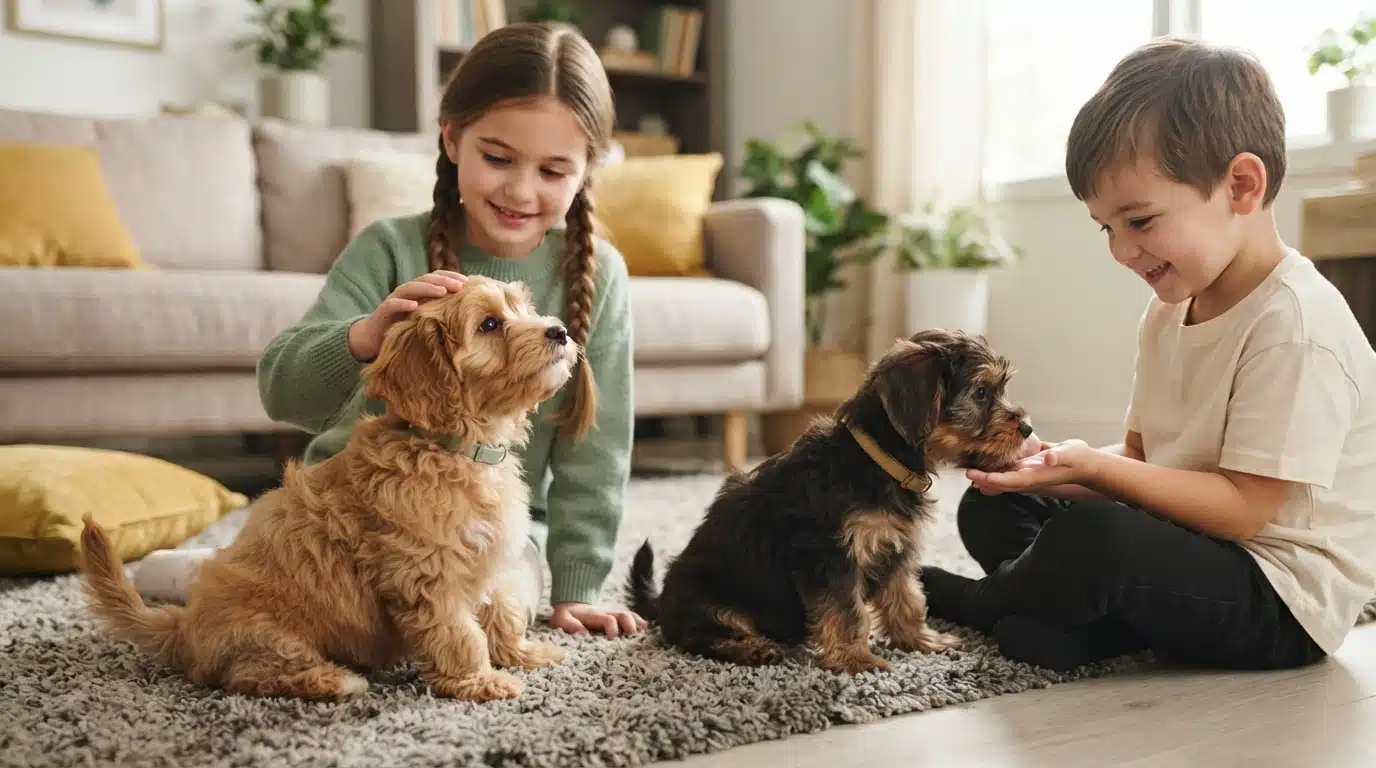
Which Is Better with Children and Family Routines?
For most families with young kids, a Havapoo is usually the safer bet than the broad doodle category. Size matters here. A small puppy can fit family life well, but it also needs more protection from toddler chaos.
In homes with babies, toddlers, or kids who still grab, fall, or run through the house, keep these points in mind:
- Havapoos are small and easy to manage
- That same small size makes them easier to hurt by accident
- Larger doodle puppies may handle bumps better
- Some doodles get rowdier and knock kids over more often
The real issue is not just breed. It is supervision. The AKC says young children need constant supervision with dogs, and kids should never pull ears, tails, or disturb a dog while eating or resting, according to AKC guidance on dogs and children.

If your child is under 5, choose the puppy with the calmest temperament, not the trendiest label.
| Family situation | Havapoo | Doodle puppy |
|---|---|---|
| Toddlers and tight spaces | Better fit if supervised closely | Can feel bulkier or more rambunctious |
| Rough play risk | Higher injury risk due to small size | Better physical sturdiness in some mixes |
| Apartment routine | Usually easier | Varies a lot by mix |
Affection is strong on both sides, but Havapoos often win on day-to-day predictability. They tend to stay close, enjoy lap time, and fit a steady home rhythm well. Doodle puppies can be just as loving, but the category is wide, so confidence and energy can vary more.
For busy families, separation habits matter too. The AKC notes puppies need to learn alone time slowly, and very young puppies should only be left alone for short periods, based on age, in its puppy alone-time guide.
- Pick a puppy that recovers fast after new sounds or handling.
- Build a simple routine for naps, potty breaks, meals, and crate time.
- Teach kids to invite play, not force it.
Also Read: About
Grooming, Shedding, and Allergy Expectations
Why low shedding still means real grooming work
A Havapoo often sheds less than many other small mixes, but that does not mean easy care. Low-shedding coats trap loose hair instead of dropping it on your floor. That sounds great until the coat starts tangling. Poodle coats need routine brushing to prevent mats, and regular trimming is part of the deal, not an extra, according to the American Kennel Club grooming guide.
For most families, expect:
- Brushing several times a week
- Professional grooming every 6 to 8 weeks
- Extra care around ears, eyes, and paws
If you want less hair on the couch, you usually trade for more time with a brush.

How coat variability changes doodle maintenance
“Doodle puppies” is a wide bucket. A doodle may have a tight curly coat, a loose wavy coat, or a mixed texture that changes as the puppy grows. That makes upkeep less predictable than many families expect.
A Havapoo is still a mix, but the size and coat range are usually narrower than the larger doodle world. That helps families plan better.
| Puppy type | Coat predictability | Grooming load | Family impact |
|---|---|---|---|
| Havapoo | More consistent range | Moderate to high | Easier to budget and schedule |
| Small doodle puppy | Variable | Moderate to high | Depends on curl, density, and matting tendency |
| Large doodle puppy | Often less predictable | High | More drying, brushing, and grooming time |
What allergy-sensitive families should expect
No puppy is truly hypoallergenic. Dog allergies usually come from proteins in dander, saliva, or urine, not just loose fur, as explained by Mayo Clinic. So a lower-shedding Havapoo may be a better fit, but never a sure bet.
Families with allergies should:
- Meet the puppy in person if possible.
- Ask about coat type and parent breeds.
- Keep grooming and home cleaning consistent.
If anyone in your home has asthma or strong pet allergies, test real exposure before you commit.
Training, Exercise, and Apartment or House Fit
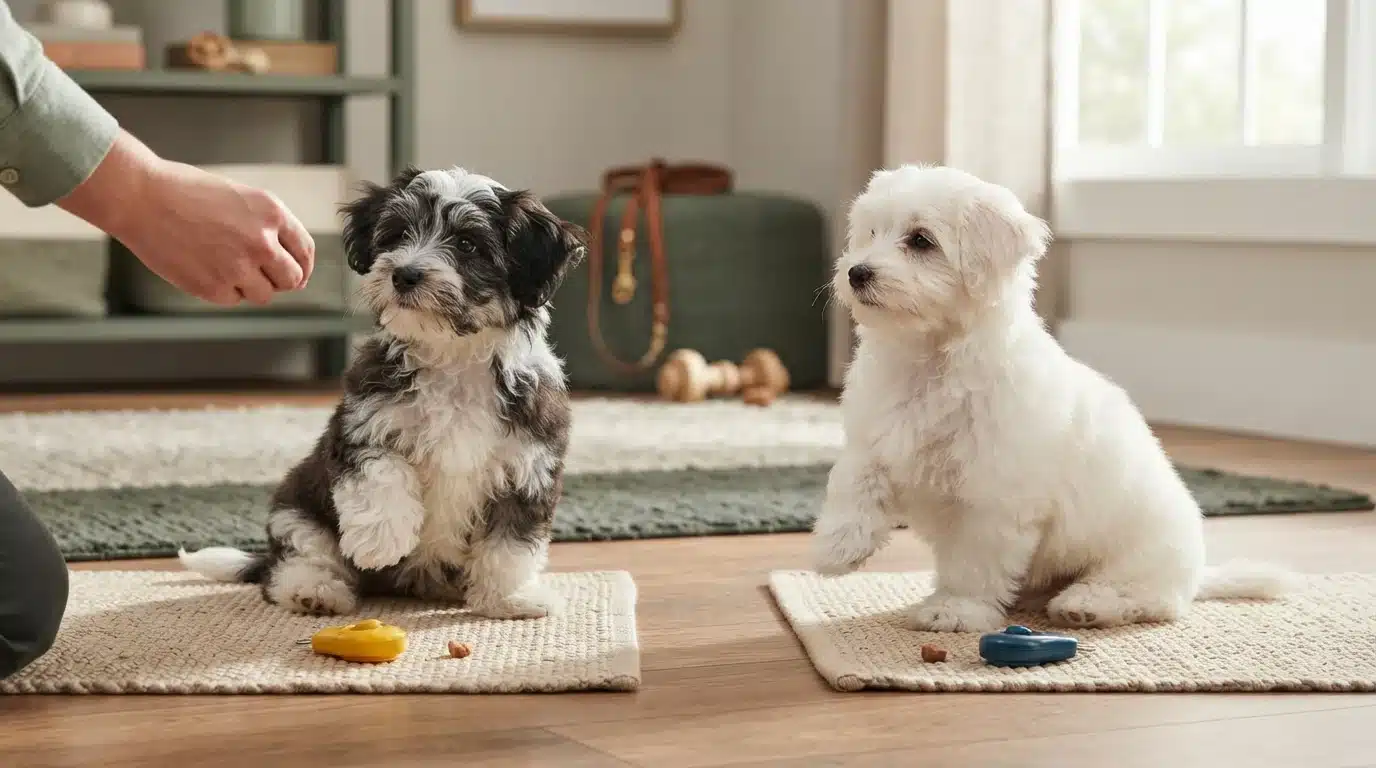
A Havapoo is usually easier for families who want a small dog with a simpler daily rhythm. PetMD notes that Havapoos are smart, do well with consistent positive training, and usually need only moderate daily exercise PetMD’s breed guide. That often means:
- short training sessions
- food puzzles or sniff games
- one or two walks plus indoor play
Some doodle puppies learn fast too, but “doodle” covers a wide range of mixes and temperaments. A 2026 PLOS One study on designer Poodle-cross behavior found that buyers should not assume doodle crosses need minimal training.

Energy can swing a lot more across doodle types. A small Havapoo often lands in the moderate zone. A mini or medium doodle may need more miles, more play, and more structure every day.
Use this quick check:
| Puppy type | Exercise need | Mental work | Family fit |
|---|---|---|---|
| Havapoo | Moderate | Moderate | Strong for busy families |
| Small doodle | Moderate to medium | Medium | Good with routine |
| Larger doodle | Medium to high | High | Better for active homes |
Size does not always predict effort. A smaller doodle can still be loud, busy, or clingy.
For apartments, Havapoos have a clear edge because they stay small and adapt well. Houses help any puppy, but yards do not replace walks or training. Think about:
- barking with shared walls
- potty trips in bad weather
- stair safety for tiny pups
- how long the dog will be alone
Also Read: Cavapoo vs Cockapoo vs Havapoo: Comparing the Top Doodle Breeds
Health, Lifespan, and What Responsible Buyers Should Ask
Havapoos often feel easier to predict because both parent breeds are small. That matters. Smaller dogs usually put less strain on joints than medium or large doodle crosses, and Havapoos are commonly listed around 12 to 16 years in lifespan on Wikipedia’s Havapoo page. The Havanese side also brings known small-breed watchouts, like patellar luxation, eye disease, dental trouble, and Legg-Calve-Perthes, which PetMD notes in its Havanese health guide.
A smaller cross is not a guarantee of better health. It just gives families fewer size-related surprises.

Doodle puppies are a wide category, not one health profile. A Mini Goldendoodle, Bernedoodle, and Havapoo do not carry the same risk mix. Health depends on the exact cross, parent size, and whether the breeder tested for issues tied to both breeds. That is why a Havapoo can be a safer bet for families who want a smaller companion with a tighter range in adult size, coat care, and exercise needs.
Ask every breeder these questions before you leave a deposit:
- What health tests were done on both parents?
- Can I see proof, not just a promise?
- What issues have shown up in past litters or relatives?
- What is the expected adult size range?
- Do you offer a written contract and health guarantee?
- How are puppies socialized before going home?
Good breeders answer clearly, show records fast, and never rush you.
Also Read: Early Development
Which Should You Choose: Havapoo Puppies or Doodle Puppies?
Choose Havapoo Puppies if you want predictability
Havapoo puppies make more sense for many families because the range is tighter. A Havapoo is usually a Havanese mixed with a Toy or Miniature Poodle, and that often keeps the adult size in a smaller, easier-to-manage window. The Havanese itself has an AKC height range of 8.5 to 11.5 inches, and Havapoos are commonly listed around 8 to 15 inches and 7 to 20 pounds in most cases, according to the AKC Havanese standard and Wikipedia’s Havapoo overview.
- Better for apartments
- Easier for young kids to handle
- Usually lower risk of ending up bigger than expected
If your top goal is a small, cuddly family dog with fewer surprises, Havapoo puppies are the safer bet.
Choose Doodle Puppies if you want more size or variety
Doodle puppies fit better if you want more options, not more certainty. “Doodle” can mean many mixes, from tiny to large, calm to busy, soft-wavy to very curly.
That variety helps if your family wants something specific, such as:
- A larger dog for an active home
- A sturdier playmate for older kids
- A certain look, color, or coat type
The trade-off is simple:
- More choices
- Wider size range
- Less day-one predictability
A Doodle can be a great family dog, but you need to judge the exact mix, parent sizes, and breeder habits, not just the label.
The practical final test
Use this quick filter before you choose:
| Family need | Better fit |
|---|---|
| Small home or apartment | Havapoo puppies |
| Want the smallest likely adult dog | Havapoo puppies |
| Want more size options | Doodle puppies |
| Okay with more variation | Doodle puppies |
If your family wants simple, small, and steady, pick Havapoo puppies. If you want a broader menu of sizes and styles, pick Doodle puppies.

Still weighing a Havapoo against other doodle puppies? See what a more predictable, family-ready path looks like with Sage Puppies. Their home-raised Havapoo puppies come from health-tested parents, get early socialization, and fit a clear, family-first adoption process. Visit the site, review available puppies, and take the next step if you want a small companion with fewer surprises.
Frequently Asked Questions
Q1: What are the main differences between Havapoo and Doodle puppies for families?
Havapoos are usually smaller, easier to manage, and more size-predictable. Doodle puppies vary a lot because that label covers many mixes. For families, the biggest difference is consistency – Havapoos often offer a more dependable fit for apartments, younger kids, and first-time owners.
Q2: Is a Havapoo or a Doodle better suited for families with young children?
A well-bred puppy from either group can do well, but Havapoos often suit young families better because they stay small, bond closely, and need less physical space. Some larger Doodles handle rough play better, though their size and energy can feel like a lot.
Q3: What factors should families consider when choosing between Havapoo and Doodle puppies?
Focus on size, energy, coat care, trainability, noise level, and budget. Also think about your home setup, allergy concerns, and how much grooming you can handle. A puppy that matches your daily routine usually works out better than the trendiest breed.
Q4: Are Havapoos easier to train than Doodle puppies?
Often, yes. Havapoos usually learn fast and respond well to short, positive sessions. Doodles can be smart too, but some are more excitable or stubborn. > Families who want a simpler start often prefer a smaller, more predictable puppy with steady early socialization.
Q5: Which option is better for apartment living and allergy-sensitive homes?
Havapoos often have the edge in apartments because they need less room and are easier to exercise indoors. Neither choice is truly hypoallergenic, but low-shedding coats may help some families. Breeder care, coat type, and grooming matter as much as the breed label.
Conclusion
For most families, the better choice depends on how much predictability you want. A Havapoo usually fits homes that want a small, affectionate dog with easier size expectations, solid apartment potential, and a gentle companion feel. Wikipedia’s Havapoo overview notes the mix is typically small, low-shedding, and adaptable, which lines up well with family life.
“Doodle puppies” can still be great pets, but that label covers a wide range of mixes, sizes, coats, and energy levels. That wider range means more guesswork. If you want a narrower target for size and daily life, Havapoo often wins.
Keep two points in mind:
- No dog is truly hypoallergenic. The AKC says no dog is 100% hypoallergenic.
- Temperament and coat still vary by puppy, even within the same mix.
If your family wants small, cuddly, and more manageable, Havapoo is often the safer bet.