Quick Summary: Vet a Havanese breeder by checking the puppy’s veterinary records, the parents’ OFA hip and patella results, current CAER eye exams, and DNA tests separately, since DNA panels cannot rule out joint, heart, or hearing problems. Verify claims through the OFA database, request written records and a clear contract, and schedule your own veterinary exam within 72 hours of pickup. Specific, verifiable answers and willingness to show records are good signs, while vague responses, missing dates, pressure to pay, or refusal to let you inspect the litter are red flags.
Ask any Havanese breeder for their dog’s health certificate and watch which part they hand you first. If it is a DNA panel result sheet, you still do not know whether that parent’s hips were ever x-rayed. A Havanese breeder vet checklist fixes that, because it separates three very different records: a puppy’s own exam and vaccine history, parental screening like OFA hips and patellas, and DNA tests for conditions such as hereditary cataracts. Mixing them up is how buyers end up with paperwork that sounds thorough but proves nothing. This guide gives you twelve questions to ask Havanese breeder staff, explains what a good answer sounds like, and shows you how to verify each claim yourself through OFA and CHIC listings instead of trusting screenshots. Whether you are learning how to vet a Havanese breeder for the first time or comparing two litters, this Havanese breeder vet checklist keeps every question tied to real evidence.
Health Questions to Ask About the Parents and the Breed
Start with four questions before you fall for a face:
- Have both parents passed OFA hips and patellas? These joint checks catch problems common in small breeds.
- When was the last CAER eye exam? It screens for inherited eye disease.
- Can I see DNA results for hereditary conditions? Ask which tests were run, not just “yes, tested.”
- Does either parent have a CHIC number? It confirms the required screenings were done and published.
A breeder with clean answers will show records gladly. One who stalls or sends blurry screenshots is telling you something too.
What health tests should Havanese parents have before breeding?
Parent health testing means the screenings the Havanese Club of America requires for a CHIC certificate: OFA hips, OFA patellas, and a current eye exam. Many careful breeders add a BAER hearing test and DNA panels on top. Ask for the registration names of both parents so you can look up every result yourself. Our guide to questions about health-tested puppy parents walks through what each answer should sound like.
Which Havanese health conditions should you ask about?
The breed’s known risks go beyond the joints. Ask specifically about:
- Patellar luxation, where the kneecap slips out of place
- Hereditary cataracts and other inherited eye disease
- Liver shunt (portosystemic shunt), a blood vessel defect
- Legg-Calve-Perthes disease, a hip joint problem in small dogs
- Congenital deafness, which BAER testing detects
A good breeder names these without prompting and explains how their lines avoid them.
How to read an OFA or CHIC record yourself
You can verify every claim in about two minutes:
- Go to ofa.org and open the breed search.
- Type the parent’s registered name or number.
- Check that hips, patellas, and eye results appear and are normal.
- Confirm a CHIC number exists if the breeder claims one.
If results are missing, ask why. The OFA CHIC program lists results publicly, so there is no reason for you to trust a screenshot.
What a DNA panel does not tell you
DNA tests screen for known gene variants, and many Havanese panels are clear. They cannot rule out hip or kneecap problems, heart issues, or hearing loss. That is why physical exams stay essential. A puppy’s own first vet visit adds a layer a genetic report never will.
Questions About the Puppy’s Own Veterinary Care
Has the puppy seen a veterinarian, and what did they find?
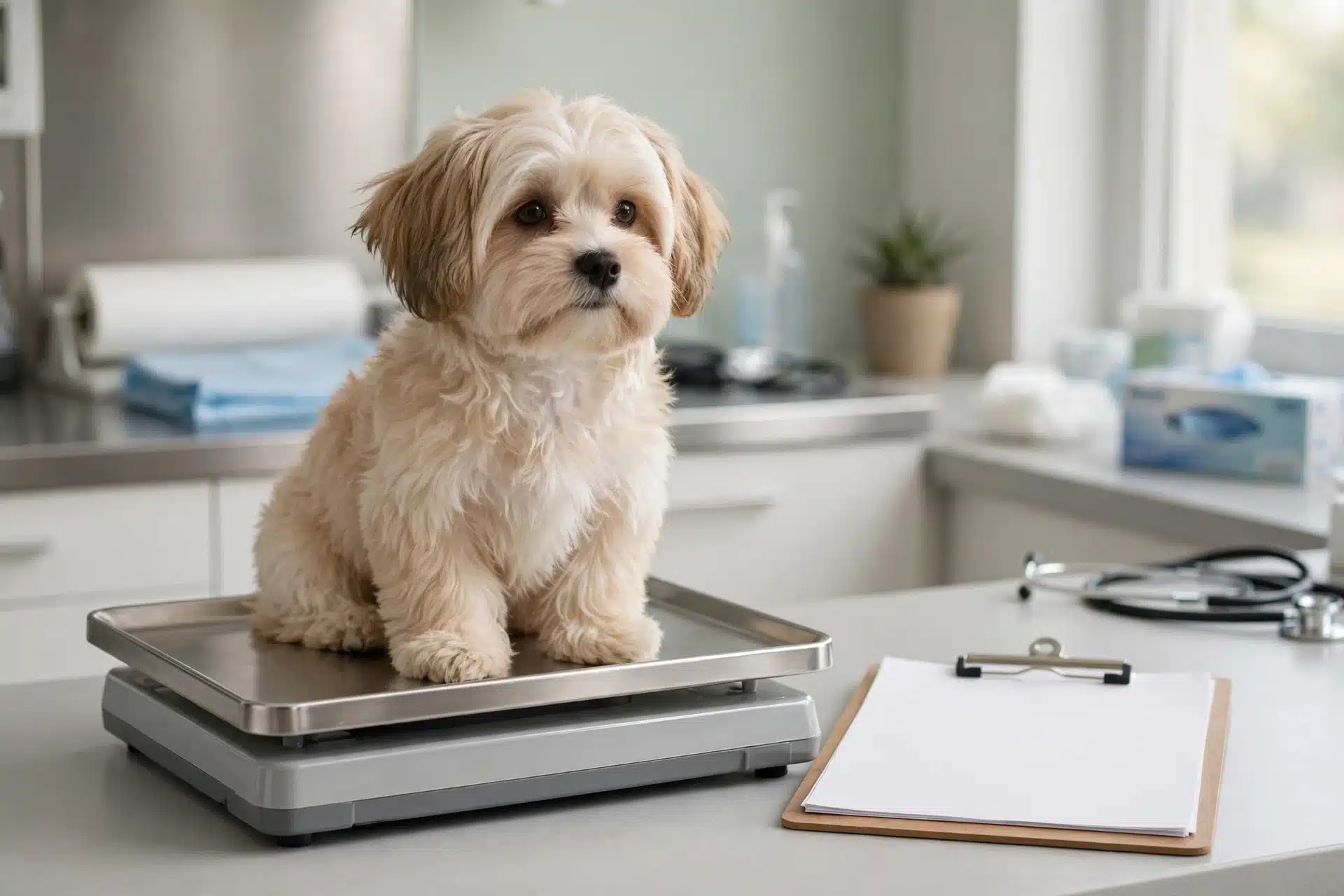
A responsible breeder has every puppy checked by a licensed vet before it leaves, often called a pre-purchase veterinary exam. Ask when the exam happened, who performed it, and what the vet noted about the heart, knees, eyes, ears, and bite. Get the specifics. “The vet saw the litter” is not the same as “each puppy passed an individual exam.” Request the exam date in writing so your own vet can schedule a follow-up within a few days of pickup.
What vaccinations and deworming have the puppies received?
Puppies need a series of shots, not a single visit. At eight weeks, a well-cared-for puppy has usually had its first DHPP dose and two or more dewormings. Ask exactly which vaccine was given, the brand, and the dates. Then get the paper record, because your vet will use it to time the next doses correctly. Some states also require a certificate of veterinary inspection for puppy sales, so ask whether one applies in your state.
What paperwork should come home with the puppy?
Before you pay a deposit, ask for these documents:
- Written vaccination and deworming records with dates and products used
- The vet exam report or health certificate
- The signed puppy purchase contract and health guarantee
- Parent OFA and DNA screening results
- Feeding and care instructions
Keep originals, and photograph everything as backup. Verbal promises fade; paperwork holds up. When reviewing a breeder’s program materials, including Sage Puppies’ Havanese puppy care information, treat provided records as a starting point and confirm them with your own vet.
Questions About Where the Puppies Are Raised and How They Are Socialized
Can you meet the mother and see the litter environment?
Ask to visit in person or on a live video call. You want to see where the puppies eat, sleep and play, and meet the mother if she lives with the breeder. A clean, indoor space with room to move says a lot. If the breeder refuses any look at the environment, treat that as a warning sign. Photos can be old, so ask for a current video with today’s date on screen. A good breeder invites this kind of check rather than dodging it.

What socialization have the puppies actually had?
The socialization window closes early, so breeder work matters. Puppies handled daily, exposed to household sounds, different surfaces and gentle strangers adjust faster at home. Ask for specifics: how many people have held each puppy, what noises they hear, whether they started crate or potty introductions. Vague answers like “they’re around kids” are weaker than a described routine. The AKC notes that early positive exposure shapes adult behavior, so details here tell you how much work the breeder has actually done.
How old are the puppies, and when do they go home?
Most Havanese go home between 8 and 12 weeks old. Beware of breeders sending puppies home before 8 weeks; that early separation affects bite control and confidence. Ask exactly when your puppy leaves and what happens between your deposit and pickup day. Programs like Sage Puppies use that window for continued handling, so your puppy arrives already started on house training.
If you want a deeper picture of the breed behind all this, the Havanese care guide covers temperament and daily needs.
Questions About the Breeder’s History, Contract and Support
Health records tell you about the puppy. How a breeder answers these next questions tells you about the person you will deal with for the next 15 years.
Can I talk to families who recently bought a puppy?
A confident breeder offers references without hesitation. Ask for two or three families from litters placed in the last year, not years ago. When you call, skip “would you recommend them” and ask specific things: Did the puppy match the photos and temperament description? Did the breeder answer questions after go-home day? Would they buy again? Vague answers or reluctance to connect you is a yellow flag. One or two recent conversations tell you more than a page of five-star screenshots.
What does the purchase contract actually promise?
Read the full contract before you pay anything, and keep a copy. A solid puppy purchase contract and health guarantee spells out the purchase price, deposit terms, what happens if the puppy must be returned, and any health window, such as a set number of days for a vet exam to confirm the puppy left healthy. It should also cover genetic conditions tied to the parental testing you verified earlier, plus any spay or neuter clause and its timing. Watch for vague wording like “healthy to the best of our knowledge” with no remedy attached. Ask what triggers a refund versus a replacement puppy, and get the answer in writing.

What support continues after pickup?
Ask directly: “If I call you in six months about house training or a health worry, what happens?” Good breeders answer before you finish the sentence. Look for a lifetime rehoming promise, meaning the breeder takes the dog back at any age, and a willingness to field feeding, grooming, and training questions for years. Breeders who deliver nationwide should also explain how they stay reachable after the puppy arrives.
Red Flags and Green Flags While You Are Asking
A reputable Havanese breeder welcomes your questions, verifies health testing through the OFA database, and wants the litter to go to prepared homes. If you are weighing an ethical breeder against a convincing sales pitch, the answers themselves tell you which one you are talking to.
Answers that should end the conversation
Walk away if you hear “we don’t believe in health testing,” “the vet said they’re fine,” or “results available on request” that never arrives. Other deal breakers: no vaccination or deworming dates, refusal to video call before deposit, always having “just one left,” and any pressure to decide today. A breeder who gets defensive about patella or eye results is telling you something.
Signs a breeder is doing the work
Green flags sound specific. Registered names you can look up yourself, patella and CAER eye results on both parents, a written contract with a return clause, and questions aimed back at you about your home and schedule.
What a missing record does and does not prove
A missing record is not proof of a problem. Some breeders test but never upload results, and OFA submission stays voluntary. But you cannot verify what you cannot see, so treat an unshared result as unconfirmed, not as passed.
A Verification Routine to Run Before You Pay a Deposit
Before you ever call: what to check yourself
Start with the breeder’s own records, not their word. Search the OFA website for each parent’s registered name or number and confirm results for OFA hips, OFA patellas, and a current CAER eye exam. Havanese breeders serious about health also test for hereditary cataracts and cardiac issues, and many earn a CHIC number by meeting the breed’s requirements. If a parent has no OFA listing at all, ask why before you ask about anything else.
During the conversation: how to ask without sounding adversarial
Frame questions as learning, not testing. Say “Can you walk me through the parents’ patella results?” instead of “Prove your dogs are clear.” Good breeders enjoy this talk and offer records before you finish asking. Vague answers, screenshots instead of verifiable OFA numbers, or irritation at basic questions are red flags. A trustworthy breeder will also interview you, so expect questions in return about your home and schedule. Some programs, like the application-first process at Sage Puppies, match puppies to families rather than selling to whoever pays first, and that two-way screening protects you too.
After the visit: request records, then book your own exam
Before paying any deposit, get written copies of puppy vaccination and deworming records, the parent DNA results, and a signed purchase contract that spells out the health guarantee. Then book a pre-purchase veterinary exam with your own vet within a few days. Your vet confirms the puppy’s condition independently, which is exactly what that exam exists for.
Turning the Checklist Into Your First Two Weeks at Home
Your first veterinary appointment
Book a puppy exam within 72 hours of bringing your Havanese home. Many purchase contracts make this deadline official, and some health guarantees require it, so check your paperwork before pickup day.
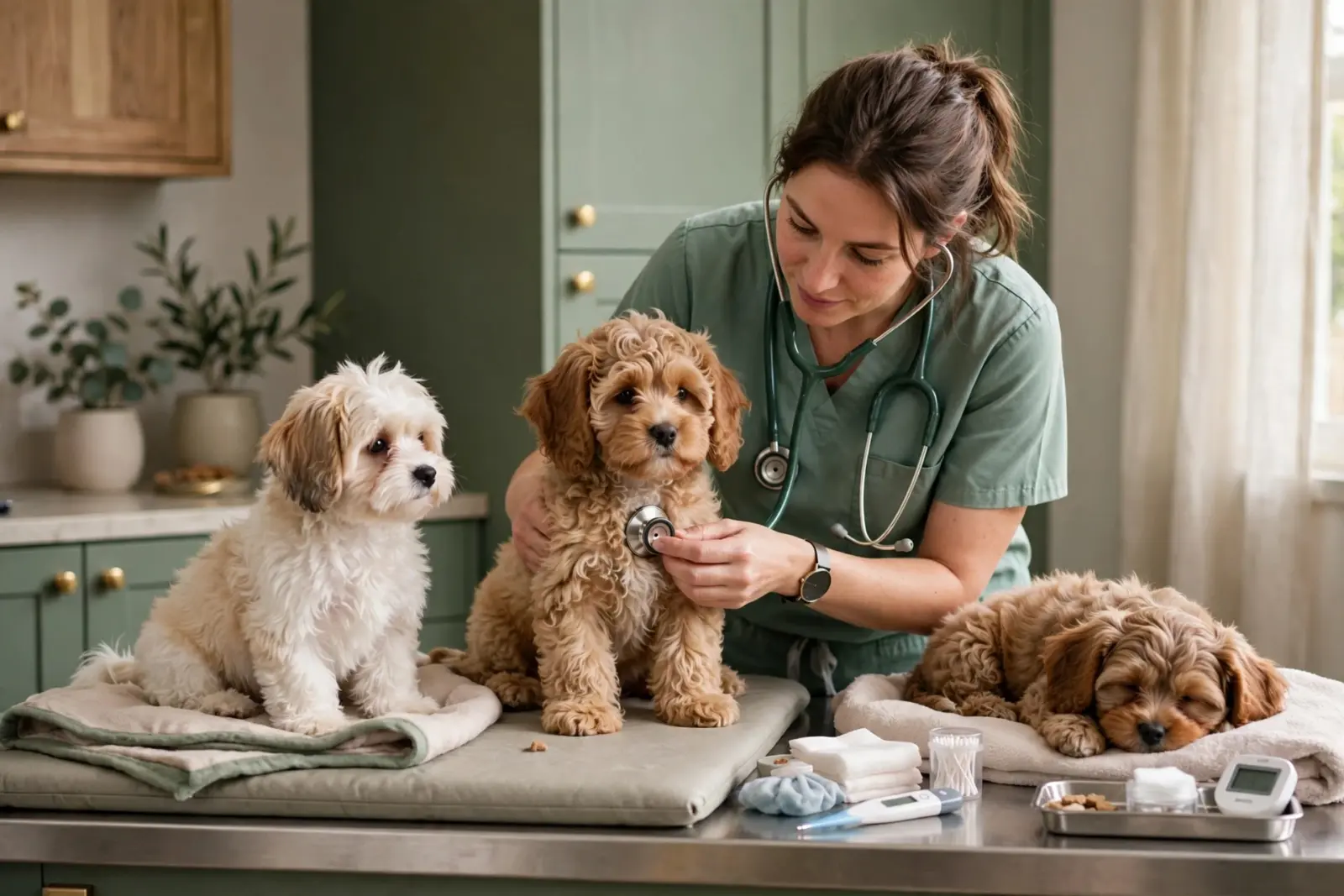
Ask your vet to do a full pre-purchase veterinary exam: listen to the heart, check the knees for any looseness, look at the eyes and ears, and feel the bite. Bring the breeder’s records so the vet can time any next vaccine or dewormer dose correctly. Ask the clinic to note the puppy’s weight, since small breeds need precise dosing.
If your vet finds a problem, call the breeder the same day. Good breeders want that conversation.
Keeping the paperwork you gathered
Everything you collected before buying now becomes your puppy’s permanent file. Store the vaccination and deworming records, the signed purchase contract and health guarantee, DNA results for both parents, and any OFA or CHIC printouts together in one folder, paper or digital.
Scan each document so a lost paper never costs you proof. Add your first vet exam report and future booster dates as you go. If you ever need to file a claim or trace a health issue later, this file answers questions memory cannot.

You now know exactly which records to ask for and how to verify them yourself. Use that list before you place a deposit anywhere. If you want a Havanese raised with that same standard of openness, see the current puppies and application process at Sage Puppies, and ask us any of these twelve questions directly.
Frequently Asked Questions
Q1: What health questions should I ask a Havanese breeder before buying a puppy?
Ask these, in order:
- Have both parents passed OFA hips and patellas?
- When was the last CAER eye exam?
- Which DNA tests were run on the parents?
- Does either parent have a CHIC number?
- What did the puppy’s own vet exam find?
Then verify every answer on ofa.org yourself.
Q2: How do I know a Havanese breeder is reputable and not a puppy mill?
Look for verifiable OFA listings for both parents, a written contract with a return clause, willingness to video call, and references from recent litters. Refusal to show the environment or missing vaccination dates point the other way.
Q3: Which health tests should Havanese parents have before breeding?
CHIC requirements for Havanese are OFA hips, OFA patellas, and a current eye exam. Careful breeders add BAER hearing tests and DNA panels for hereditary cataracts.
Q4: Can a DNA panel replace physical health testing?
No. DNA screens only known gene variants. It cannot rule out patellar luxation, hearing loss, or heart issues, so physical exams and X-rays still matter.
Q5: When should my puppy see my own vet?
Book an exam within 72 hours of pickup. Many health guarantees require this deadline, so check your contract before you leave with the puppy.
Conclusion
A Havanese breeder vet checklist works because it separates three records buyers often blur: the puppy’s own exam and vaccination history, parental screenings like OFA hips, patellas and CAER eye exams, and DNA panels that cover only known genes. Ask for registered names, confirm every result on the OFA database yourself, and treat anything unverified as unconfirmed. Then read the purchase contract closely and book a pre-purchase veterinary exam within 72 hours of pickup. Specific answers signal a breeder doing the work; vague ones and missing dates do not. Twelve honest questions protect your family and set the tone for a lifetime of support.