Puppy Care & Early Development
Handling, Grooming, and Vet Prep: Helping Puppies Feel Comfortable Being Touched
Puppy handling and grooming preparation can help a young dog feel comfortable being touched and support calmer vet prep. Paws, ears, mouths, coats, and bodies all need routine care throughout a dog’s life. This guide from Sage Puppies in South Jordan, Utah shows families how to build positive associations through short, low-pressure practice—whether they pick up locally or welcome a puppy through coordinated delivery.
The Big Picture
Why Handling Practice Matters
Being brushed, having a paw held, hearing clippers, standing on a scale, or allowing a veterinarian to look inside an ear may feel completely normal to us. To a puppy, each experience can be new, strange, and unpredictable. Comfort with touch is therefore a learned life skill—not something every puppy automatically understands.
Thoughtful preparation can make routine care easier for the puppy, family, groomer, and veterinary team. It also gives owners a better chance to notice changes such as a new mat, tender paw, skin irritation, or unusual sensitivity. The goal is not to make a puppy tolerate anything without objection. The goal is to teach that calm touch is predictable, brief, safe, and followed by release or something pleasant.
Start Here
Build a Positive Foundation Before Adding Tools
Begin when your puppy is calm, awake, and receptive—not during energetic play, immediately after a stressful event, or when the puppy desperately needs to sleep or go outside. Use a non-slip surface, keep the session short, and decide in advance what one tiny skill you are practicing.
Use Predictable Cues
Say a simple word such as “check” before touching and “all done” before releasing. Predictability helps the puppy understand when handling begins and ends.
Pair Touch With Good Things
Use a tiny treat, calm praise, a lickable reward, or a favorite toy when appropriate. Keep rewards small so repeated practice does not become a full meal.
Release Before Struggle
End while the puppy is still successful. Waiting until the puppy squirms, freezes, or panics teaches that handling lasts too long.
A Simple Progression
Build Comfort in Small, Repeatable Steps
Move forward only when the current step feels easy. A puppy who is relaxed while you touch a shoulder may not yet be ready for a paw squeeze, nail tool, or buzzing clipper. Separating the process into small pieces prevents the puppy from being surprised.
Begin Near a Comfortable Area
Start with a brief touch on the chest, shoulder, or side—areas many puppies find less sensitive than feet, ears, or the face. Touch, reward, and release.
Move Toward the Target Area
Slide your hand partway down a leg or toward an ear, then return to the easy area. Repeat until the puppy remains loose and interested.
Add One Second of Contact
Gently hold the paw, lift the ear flap, or rest your hand under the chin for one second. Reward and release before increasing duration.
Introduce the Tool Separately
Let the puppy see and calmly investigate the brush, comb, toothbrush, nail tool, towel, or stethoscope-like object before it touches the body.
Combine Touch and Tool Contact
Use one light brush stroke, touch the closed nail tool to one nail, or briefly rest the toothbrush against the outer lip. Then reward and finish.
Practice by Body Area
What to Practice—and What Success Looks Like
Each body area should be introduced independently. Keep your hands soft, support the puppy’s body, and avoid pulling, pinching, or holding a joint at an awkward angle.
Paws and Nails
Touch the shoulder, slide down the leg, cup the paw, touch each toe, and briefly press a toe pad. Later, show the nail tool and touch the closed tool to one nail. Have a professional demonstrate safe trimming before cutting nails yourself.
Ears
Stroke the outside of the ear, lift the ear flap for one second, look, reward, and release. Do not place swabs, fingers, or products inside the ear canal unless your veterinarian has provided specific instructions.
Mouth and Teeth
Touch under the chin, lift one side of the lip, look at the teeth, and release. Introduce a dog-safe toothbrush gradually. Never use human toothpaste; ask your veterinarian which products are appropriate.
Face and Eyes
Practice a steady hand beneath the chin while the other hand briefly touches the cheek, muzzle, and area beside the eyes. Avoid blocking the puppy’s airway or gripping the muzzle tightly.
Coat and Skin
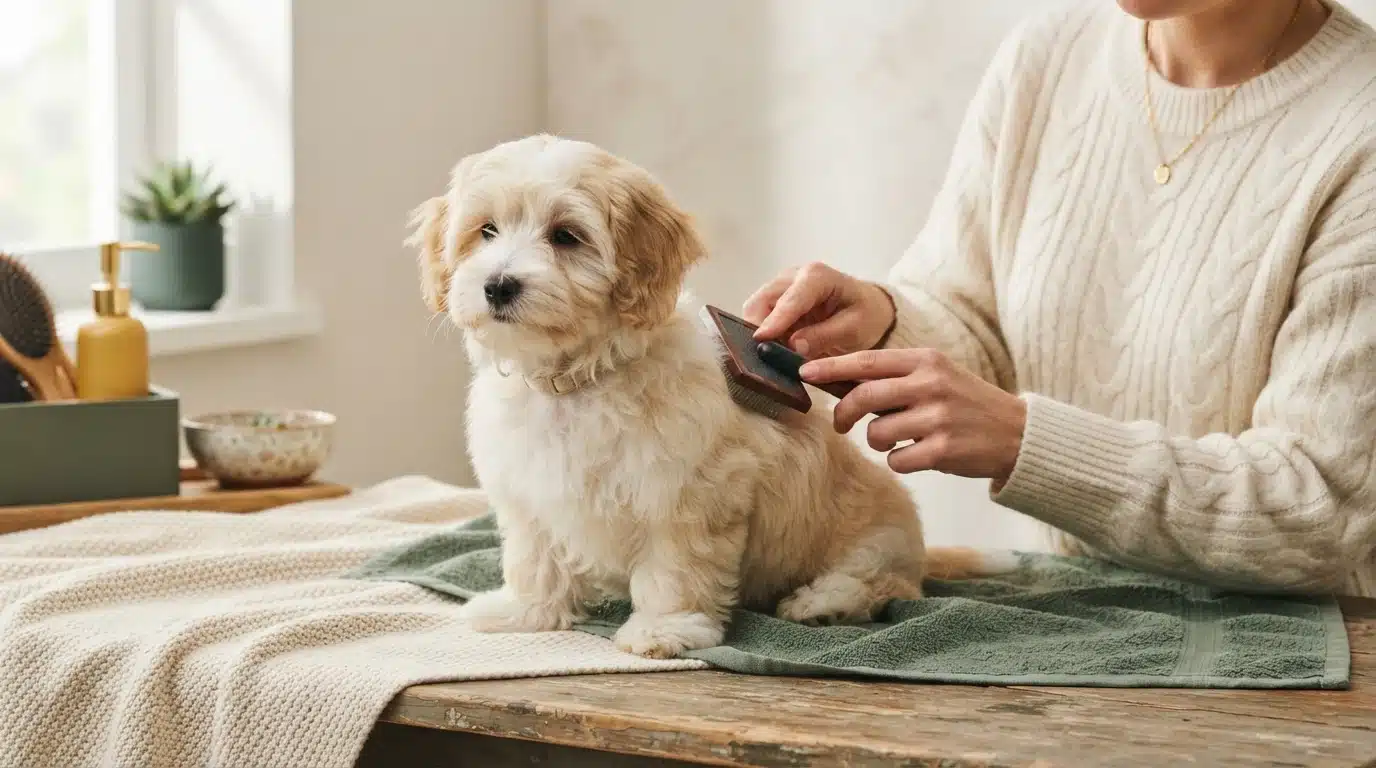
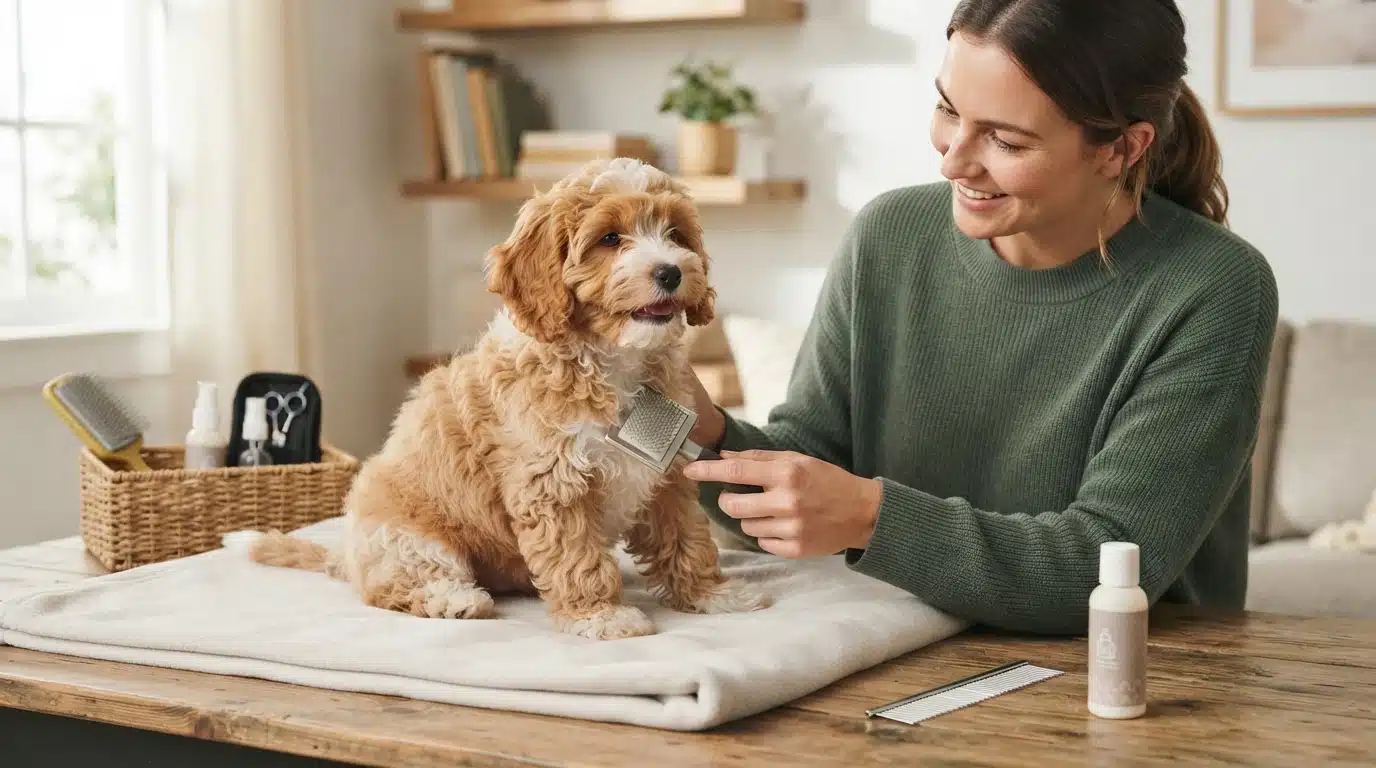
Part the coat gently, touch the skin, and introduce one brush or comb stroke at a time. Work in small sections and stop if the tool catches rather than pulling through a tangle.
Tail and Rear
Touch near the hips, stroke the tail, and briefly lift only as much as needed for routine inspection. Never pull the tail. Keep this area especially brief and respectful.
Chest and Abdomen
Rest a hand on the chest, lightly feel along the ribs, and touch the abdomen without pressing. This can help prepare for a routine physical exam while teaching the puppy to remain relaxed on a stable surface.
Grooming Preparation
Help Grooming Equipment Feel Familiar
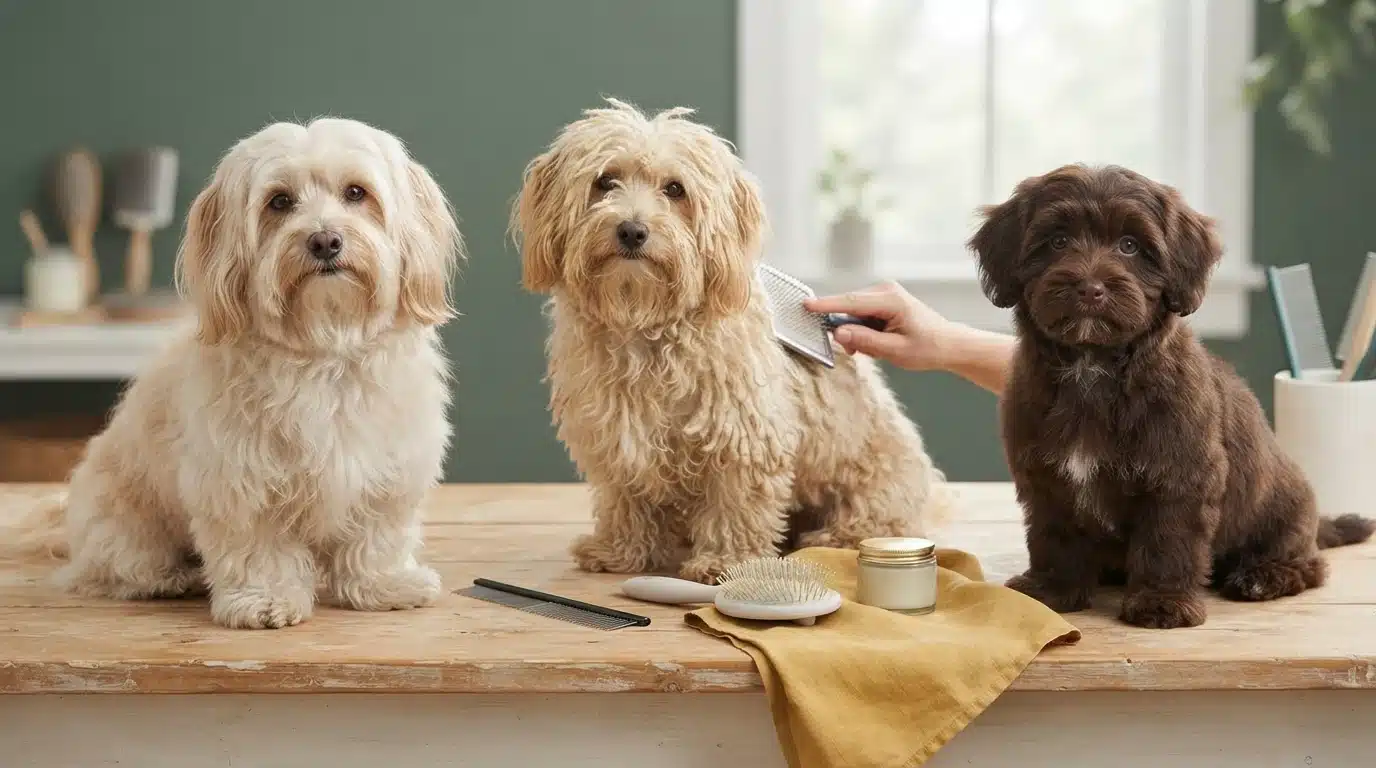
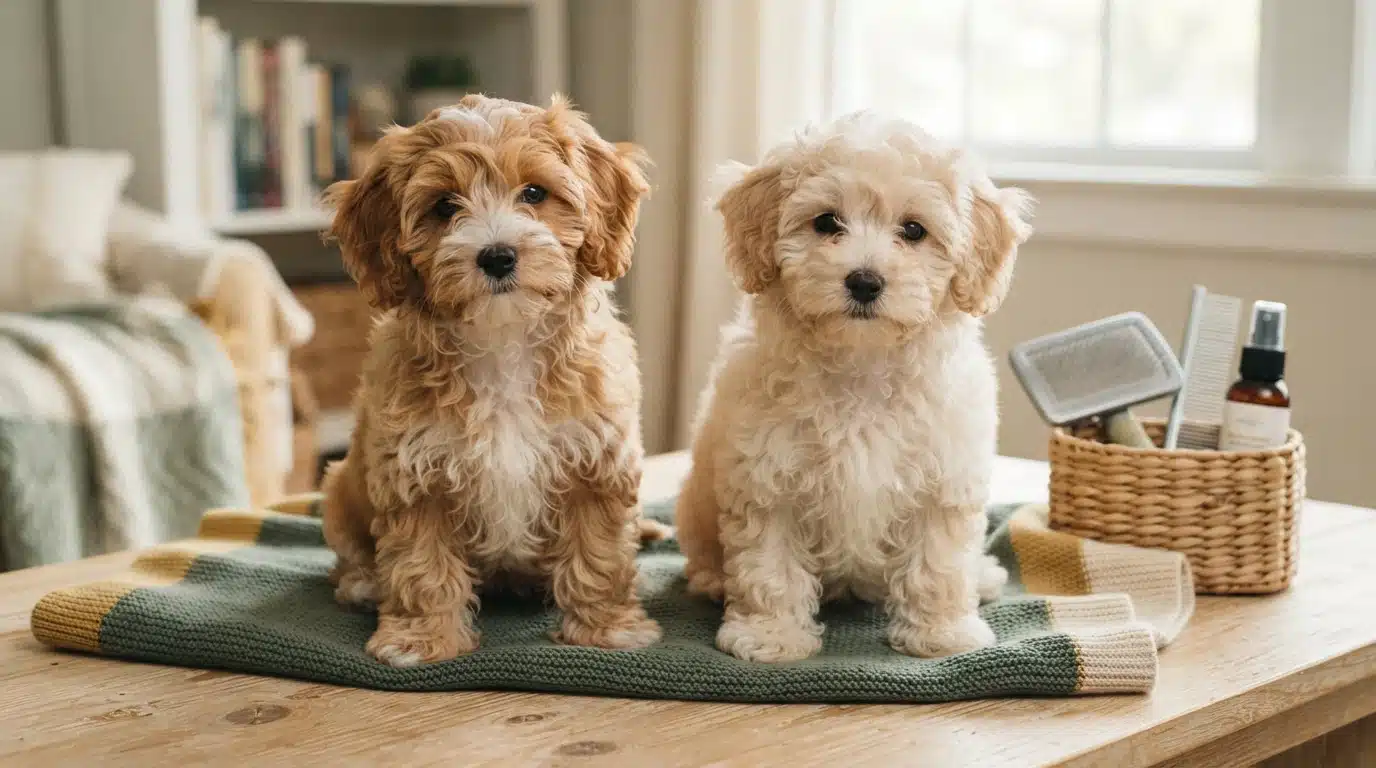
Havanese, Havapoo, and Cavapoo puppies all benefit from consistent coat care, although texture, density, curl, shedding, and maintenance needs vary by individual dog. A low-shedding appearance does not mean low-maintenance grooming. Early preparation should focus on calm handling and familiarity, not completing a full groom at home.
Brush and Comb
Start With One Easy Stroke
Let the puppy sniff the tool, reward, then use one gentle stroke on an easy area such as the shoulder. Gradually work toward the chest, legs, ears, and areas where friction commonly creates tangles.
Grooming Surface
Use a Stable, Non-Slip Mat
Practice standing for only a few seconds on a bathmat or rubber-backed surface. Support the puppy and never leave a puppy unattended on a table, counter, or elevated grooming surface.
Sound and Vibration
Introduce Noise at a Distance
Begin with a dryer or clipper sound far enough away that the puppy notices but stays comfortable. Pair the sound with rewards, then gradually decrease distance over multiple sessions.
Bath and Towel
Practice Before the First Full Bath
Let the puppy stand in a dry tub or sink with a non-slip mat, hear water from a distance, and feel a towel on the body. Keep water temperature and bathing products appropriate for puppies.
Preparing for a Professional Grooming Appointment
- Ask the groomer what handling skills would be most helpful before the first visit.
- Practice brief separation, safe crate or carrier time, and calm car rides so the entire outing is not new.
- Introduce face, feet, ear, tail, and sanitary-area handling in very short sessions.
- Keep the coat reasonably free of tangles, but do not force a brush through a mat or attempt risky scissor work on a moving puppy.
- Coordinate timing with your veterinarian and groomer based on the puppy’s health, vaccination plan, coat needs, and the facility’s policies.
Veterinary Preparation
Practice a Calm Mock Exam at Home
A veterinary appointment includes more than the exam itself. The car ride, lobby, scale, unfamiliar flooring, new people, equipment, and gentle restraint may all be novel. Preparing each piece separately can reduce the number of surprises.
Practice the Environment
- Walk across different safe surfaces.
- Step onto a flat platform or home scale without forcing.
- Relax on a portable mat that can travel to appointments.
- Practice calm entry and exit from a carrier or vehicle restraint.
Practice the Exam
- Touch the chest, shoulders, ribs, abdomen, and hips.
- Lift an ear flap and one side of the lip.
- Hold one paw for a second.
- Use a short, gentle supporting hold, then release.
Do not imitate injections, painful procedures, or forceful restraint at home. The purpose of a mock exam is to make ordinary touch and positioning familiar. Let the veterinary team perform medical procedures and tell them in advance if your puppy is fearful, sensitive, injured, or has had a difficult handling experience.
Easy Daily Practice
A Five-Minute Handling Routine
Five minutes is a maximum, not a requirement. Many puppies do better with several 20- to 60-second sessions spread throughout the day. Stop early whenever the puppy is relaxed and successful.
Try This Simple Sequence
- Settle: Begin on a non-slip mat with three calm rewards.
- Easy touch: Touch the chest or shoulder, reward, and release.
- One target area: Practice one paw, one ear, one lip lift, or two brush strokes.
- One tool exposure: Show the comb, towel, toothbrush, or closed nail tool and reward calm interest.
- Finish clearly: Say “all done,” release the puppy, and transition to play, rest, or another normal activity.
Change only one variable at a time. Do not increase touch duration, tool intensity, environmental distraction, and restraint in the same session.
Read the Puppy
Signs Your Puppy Needs a Break
Stress can be subtle. A puppy does not need to bark, snap, or struggle dramatically to be uncomfortable. Watch the whole body and compare the response with how your puppy normally looks when relaxed.
When you notice these signals, stop and create distance. At the next session, return to an easier step, shorten the duration, improve footing, or use a higher-value reward. Sudden sensitivity may also indicate pain, skin irritation, an ear problem, a sore nail, or another medical issue, so contact your veterinarian when the change is new or concerning.
Professional Support
When to Ask for Help
Contact your veterinarian, professional groomer, or a qualified reward-based trainer when your puppy repeatedly panics, bites, cannot recover after handling, becomes suddenly sensitive, or has mats, nail problems, skin changes, ear odor, discharge, pain, or another health concern. Early support is usually easier than waiting until routine care becomes a major struggle.
Tell professionals what the puppy already knows, which body areas are difficult, what rewards work, and which cue means “all done.” This gives the care team a clearer starting point and helps everyone protect the puppy’s trust.
Continue Learning
Prepare for a Confident Start at Home
Our Program
Early Development
See how thoughtful early experiences can support a puppy’s transition into family life.
Next Steps
Bringing Your Puppy Home
Plan the first days, routines, environment, and expectations before your puppy arrives.
More Resources
Puppy Care Guides
Explore practical guidance on grooming, training foundations, preparation, and daily care.
Frequently Asked Questions
Puppy Handling, Grooming, and Vet Prep FAQs
How often should I practice handling with my puppy?
Practice briefly and consistently. Several 20- to 60-second sessions can be more effective than one long session. End while your puppy is still relaxed rather than trying to complete every body area at once.
What should I do if my puppy pulls away or growls?
Stop, release the puppy, and reduce the difficulty next time. Do not punish a growl or other warning signal. Check for possible pain and seek help from your veterinarian or a qualified reward-based professional if the reaction is repeated, intense, or sudden.
When should a puppy have its first professional grooming appointment?
The right timing depends on coat condition, health, vaccination status, the groomer’s policies, and your veterinarian’s guidance. Contact a groomer early so you can discuss an introductory appointment and the skills to practice beforehand.
Can I use treats during grooming and vet prep?
Yes, small rewards can help create positive associations when they are appropriate for your puppy’s diet. Follow veterinary instructions if food must be withheld before testing, sedation, or another procedure.
How can I get my puppy comfortable with nail care?
Separate nail care into small steps: touch the leg, hold the paw, touch a toe, show the tool, and briefly touch the closed tool to a nail. Ask a veterinarian or groomer to demonstrate safe trimming before attempting it yourself.
Do Havanese, Havapoo, and Cavapoo puppies all need regular grooming?
Yes. The amount and type of grooming vary with the individual coat, but all three breeds benefit from routine brushing, combing, nail care, ear and dental care, and professional guidance. Coat appearance does not guarantee a specific shedding or maintenance level.
Thoughtful Preparation From the Start
Looking for a Family-Raised Puppy?
Explore available Havanese, Havapoo, and Cavapoo puppies, learn how the Sage Puppies process works, and take the next step when the timing is right for your family.
This article provides general educational information and does not replace individualized veterinary, grooming, or behavior guidance.