Quick Summary: Choosing a Cavapoo puppy involves comparing breeder transparency, health testing, and early socialization rather than just appearance or price. Look for clear records, parent temperament, and a supportive, honest breeder who provides detailed information and support. Prioritize a well-raised, health-tested litter with a good match to your lifestyle over quick deals or flashy photos.
When families search for cavapoos near me, the real challenge is not finding puppy ads. It is figuring out which litter is truly worth your time, money, and trust. Cute photos all look the same at first. Good breeders and weak listings often do not.
This guide helps you compare cavapoos near me with a clear buyer-first filter. You will learn how to judge health testing, parent temperament, breeder honesty, go-home timing, support, and the small details that separate a strong litter from a risky one. That matters whether you are buying in Utah, South Jordan, or looking nationwide.
We work from the standards serious puppy families care about most: transparent breeding, family-raised puppies, stable temperaments, and clear next steps. If you have been scrolling through cavapoos near me and still feel unsure, this article will help you compare litters with more confidence and fewer regrets.
What to Compare First When You Look at Cavapoo Litters
Start With the breeder, not the cutest puppy photo
Your first comparison is not color, size, or teddy-bear face. It is the breeder. A strong breeder will show parent health testing, explain how puppies are raised, and stay available after go-home day. Cornell notes that responsible breeders should do recommended health testing and provide early socialization plus lifelong support according to Cornell.
Use this quick screen first:
- Parent health records
- Clear socialization plan
- Vaccination and deworming record
- Written contract
- Return or rehoming policy
- Willingness to answer hard questions
If a breeder avoids proof and pushes a fast deposit, move on.
Compare litter-level details, not just breed labels
“Cavapoo” alone does not tell you enough. One litter can feel very different from another. Compare the litter as a group, then narrow down to a puppy.
Ask for these details:
- Parent size and temperament
- Expected adult weight range
- Energy level of the litter
- How the puppies react to people and new sounds
- Feeding schedule and current food
- Any early crate, potty, or handling work
The AKC says buyers should ask how puppies are socialized and whether the breeder has health-tested the parents in its breeder questions guide.
| Compare Item | Strong Signal | Weak Signal |
|---|---|---|
| Parents | Calm, friendly, documented | Vague answers |
| Raising setup | Home-raised, daily handling | Little detail |
| Records | Easy to review | “Available later” |
| Match process | Breeder helps fit family | Buyer picks from photos only |
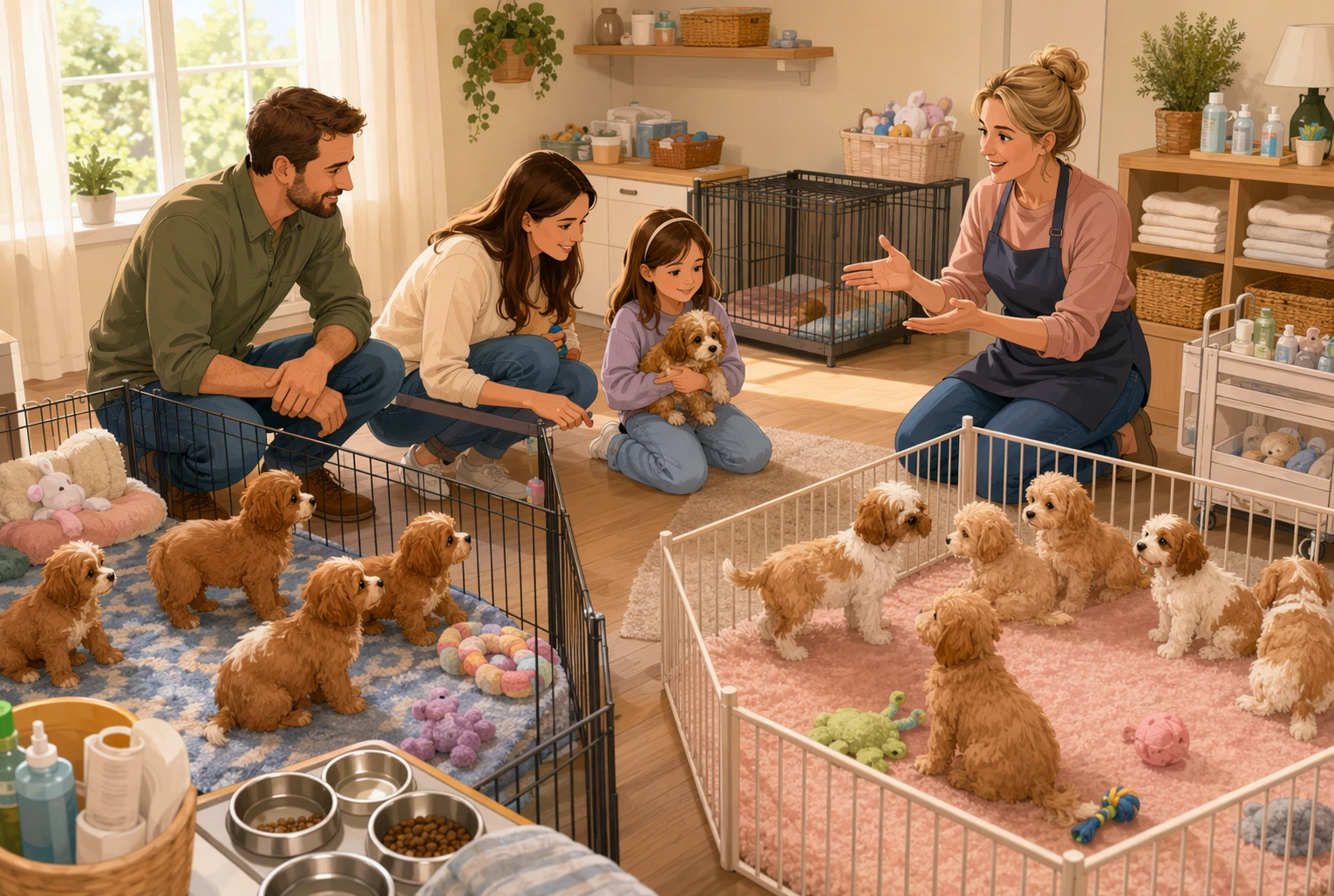
Check whether pickup or delivery fits your family
Logistics matter more than many buyers expect. A great litter is not a great fit if the handoff plan adds stress or confusion. Compare whether you want local pickup, to meet in Utah, or use delivery.
Look at:
- Who handles the puppy during travel
- How long the trip will be
- What records come with the puppy
- What support you get the first week home
If a puppy is transported for hire, USDA APHIS says commercial animal transport must meet Animal Welfare Act standards under APHIS transport guidance.
Ask for the exact handoff plan before you reserve. Good breeders make this simple, clear, and calm.
| Option | Best For | Main Question |
|---|---|---|
| Local pickup | Utah families | Can you meet the breeder in person? |
| Flight or ground delivery | Out-of-state buyers | Who is responsible during transit? |
| Meet halfway | Regional buyers | Is the transfer point safe and clear? |
Also Read: 10 Questions to Ask Before Buying a Puppy Locally
How to Judge Health Testing and Breeding Transparency
Good breeders do not just say “health tested.” They show you what was tested, when, and on which parent. For Cavapoos, that matters because you are blending two breeds with their own known risks.
What health testing should tell you about the parents
Ask for the sire and dam’s actual results, not a text summary. The Orthopedic Foundation for Animals says buyers should review parent screening records and use the public OFA database when possible for prospective owners. AKC also notes that health testing standards come from each purebred parent club, which is why Cavapoo buyers should look at both Cavalier and Poodle side testing through AKC health testing requirements.
A useful breeder should be able to explain:
- Heart testing
- Eye testing
- Patella or hip checks
- DNA panels tied to the parent breeds
- Dates of each test, not just “clear”
A clean DNA panel does not replace cardiac, eye, or orthopedic exams.
| What to review | What you want to see | Red flag |
|---|---|---|
| Parent identity | Names match paperwork | Vague labels like “mom is tested” |
| Test type | Breed-relevant exams and DNA | Only one generic DNA panel |
| Test date | Recent, age-appropriate timing | Old or undated results |
How to read breeder transparency signals
Transparency is mostly about how easy a breeder makes it to verify claims. Strong programs show parent dogs, explain pairings, share records, and answer hard questions without getting defensive.
Look for these signals:
- Public proof – OFA links, certificates, or vet-issued records.
- Clear process – how puppies are raised, evaluated, and matched.
- Plain answers – no dodging when you ask about flaws, size range, or coat guess.
- Go-home clarity – what records, food, support, and next steps come with the puppy.
If a breeder markets “rare colors” louder than health records, step back.
Sage Puppies, for example, stands out more when a breeder calmly shows health-tested parents and explains family-raised care instead of pushing urgency.
Questions to ask before you reserve
Use a short list and ask every breeder the same things:
- Which tests were done on each parent, and may I see the results?
- Are any results public in OFA, or will you send copies?
- What health issues exist in these lines, even if the parents passed testing?
- How do you choose which puppies go to which homes?
- What early socialization has this litter had?
- What support do you give after go-home day?
| Question | Good answer | Walk-away answer |
|---|---|---|
| Can I see records? | “Yes, here they are” | “Trust me” |
| Can I meet a parent? | “Yes, or here is why not” | “No, not possible” |
| What if I have concerns later? | Clear follow-up plan | No support after payment |
Also Read: 10 Signs a California Puppy Listing Is a Scam – Sage Puppies
How to Compare Temperament, Socialization, and Early Training
Look for signs of real early socialization
Ask what the breeder actually does each week. Good socialization is not just “raised with love.” It should include calm, planned exposure during the early window. The AVMA review says puppies benefit from diverse, positive experiences early, and dogs with more social contact before 12 weeks were less likely to show fear or aggression later according to AVMA.
Look for proof like:
- short handling sessions by different adults
- gentle kid exposure, if available
- new surfaces, sounds, rooms, and toys
- early crate or pen time
- calm grooming and nail touch practice
- safe car rides or carrier trips
Red flags matter too:
- vague answers
- only puppy play, no calm exposure
- no mention of recovery after stress
- forced greetings or flooded experiences
The best breeders describe how puppies were exposed, not just that they were “well socialized.”
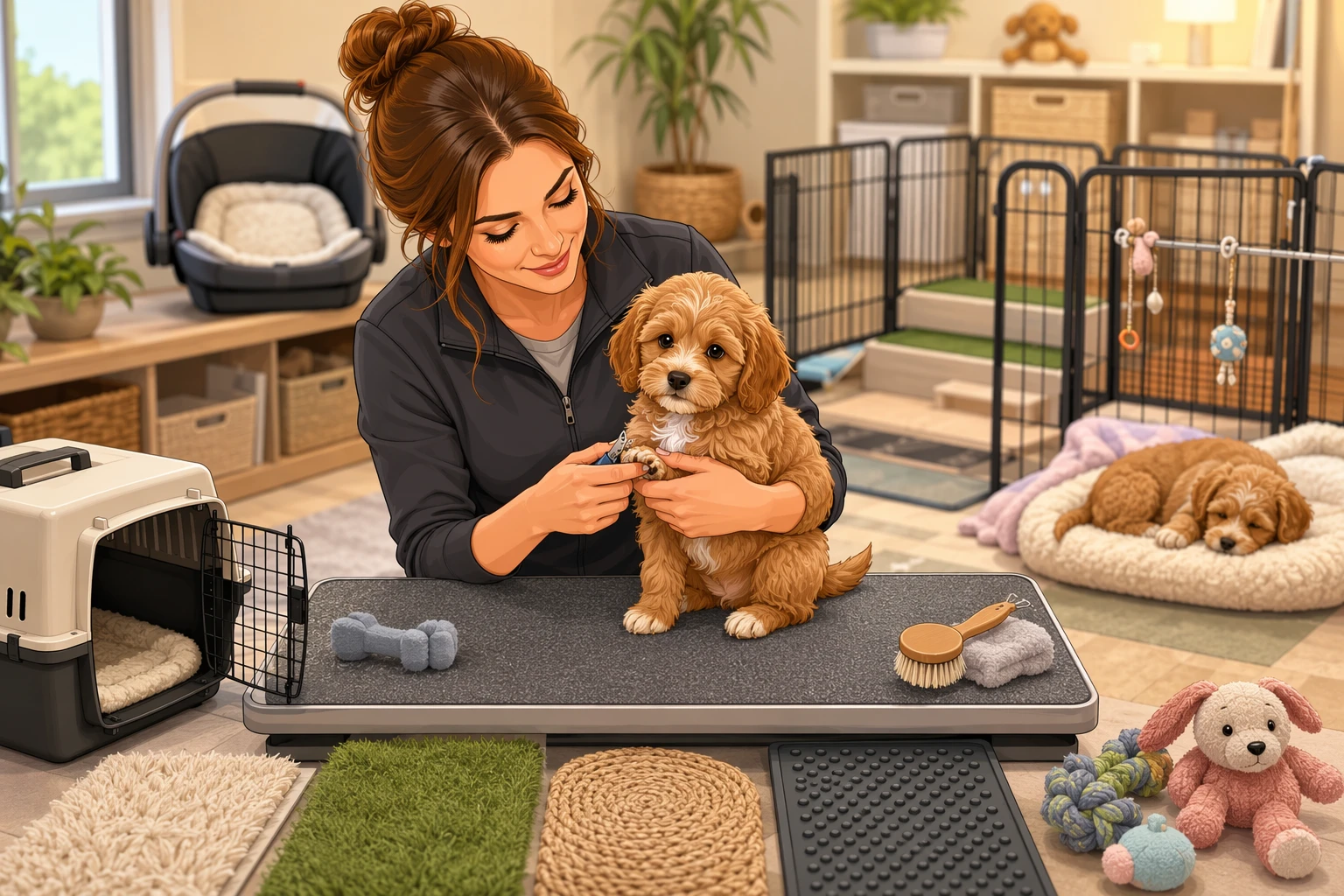
Compare temperament descriptions carefully
Skip labels like “perfect” or “super chill.” Ask for plain examples instead. A useful breeder can tell you which puppy recovers fast, startles easily, follows people, settles alone, or loves being held. That is more helpful than cute marketing names.
Use this quick comparison table:
| What breeder says | What it really tells you | Better follow-up question |
|---|---|---|
| Sweet and cuddly | Affection level only | How does this puppy act in new places? |
| Laid back | Lower activity, maybe softer nerves | Does the puppy bounce back after a surprise? |
| Outgoing | Social interest | Does the puppy stay confident without getting wild? |
| Independent | Can self-settle, or may be less people-focused | How does the puppy do with crate time and handling? |
Ask for short videos of each puppy meeting a new toy, person, or surface. You want behavior, not sales copy.
Match the litter to your real life
Do not shop for the boldest puppy if your home is quiet. Do not pick the calmest puppy if you want a busy travel buddy. Match energy, sensitivity, and trainability to your day-to-day life.
The AAHA behavior guidance notes that early positive, structured exposure matters, but each puppy should still be treated as an individual in AAHA’s behavior guidance.
Use this checklist:
- Home pace – calm, busy, kids, stairs, apartment, yard.
- Handling needs – grooming, travel, guests, vet visits.
- Training time – daily practice or limited time.
- Noise level – city sounds, other pets, frequent visitors.
Sage Puppies and similar family-raised programs should be able to help you match the litter, not just sell the next available puppy.
How to Compare Price, Value, and What Comes Home
Price only helps if you know what sits behind it. Two Cavapoo litters can look close in cost but be far apart in real value.
Start with a side-by-side checklist:
| Compare Item | Higher-value signal | Weak-value signal |
|---|---|---|
| Health records | Clear vaccine, deworming, exam history | Vague verbal updates |
| Parent testing | Proof shared before deposit | “Available later” answers |
| Contract | Easy to review in advance | Only shown at pickup |
| Go-home kit | Food, schedule, records, scent item | Toy bag with little guidance |
| Support | Breeder stays available after pickup | Contact fades after payment |
The AKC notes that a solid puppy kit often includes food, medical records, feeding notes, routine details, and contract paperwork in one folder or package according to AKC guidance.
Ask what your total spend covers, not just the puppy itself.
- Deposit terms
- Vet record copies
- Microchip status
- Registration paperwork, if promised
- Pickup or delivery details
- Early socialization work
- Post-go-home support
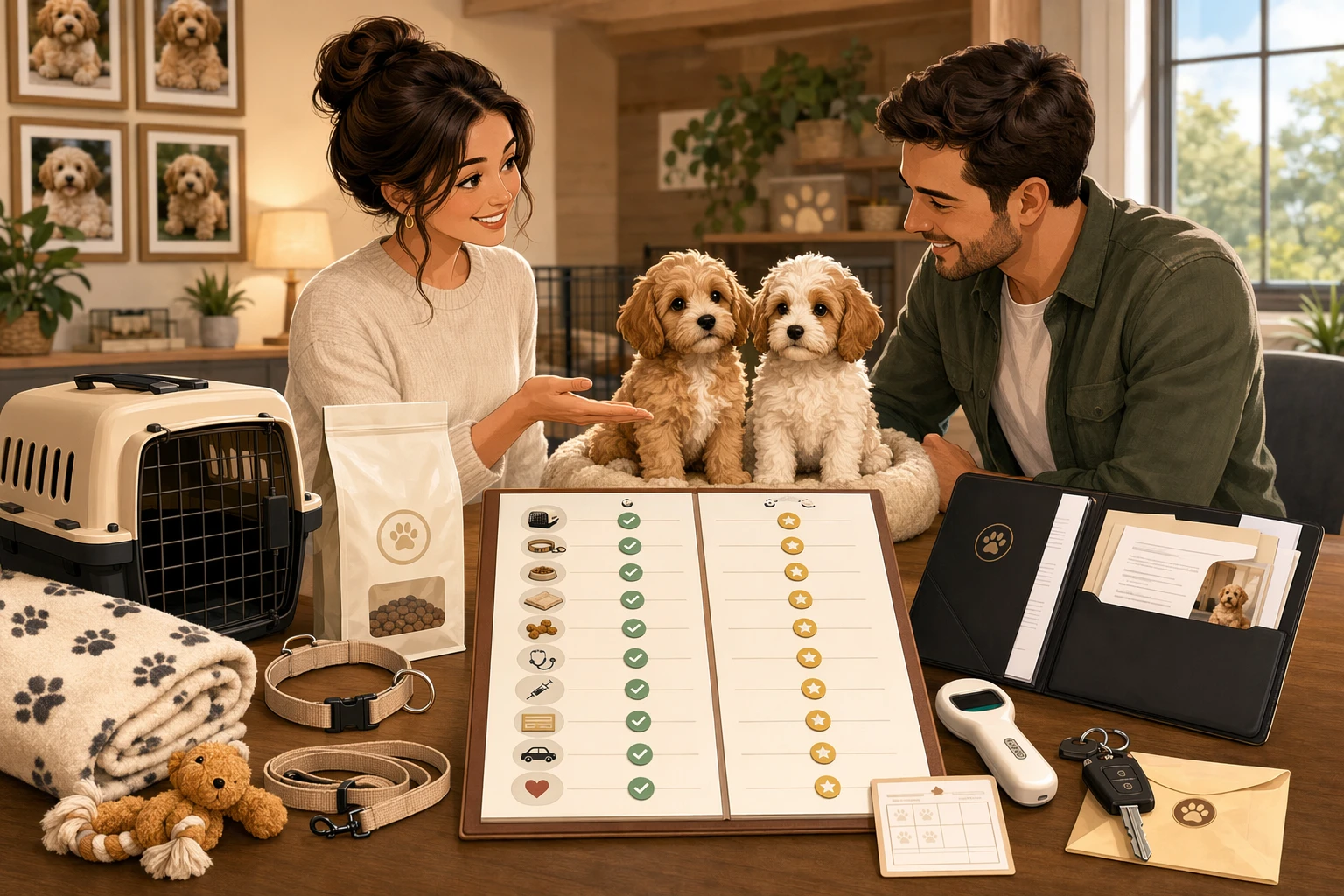
Timing also changes both price and access. The USDA says dogs transported in commerce must be at least 8 weeks old and weaned under APHIS transport rules. That matters if you are buying from out of state.
A later go-home date can mean:
- More time with littermates
- More breeder handling and routine work
- Better travel readiness
- Fewer puppies available if you wait too long
A cheap puppy that leaves too early, lacks records, or comes with unclear terms often costs more later.
Use value as your final filter. Ask yourself:
- Does this breeder explain the price calmly and clearly?
- Can I see what is included in writing?
- Do I trust the care before pickup and support after?
Qualified families usually do best with the breeder who is most transparent, not the one who sounds most exciting. At Sage Puppies, that kind of clear, family-first process is the right thing to look for in Utah or nationwide.
Also Read: Cavapoo Puppy Price Guide: What Costs Include in 2026
A Simple Side-by-Side Comparison Method for Shortlisting Litters
If you have three or four Cavapoo litters on your list, stop reading ads and start scoring them. A simple side-by-side method helps you compare what matters, not just who has the cutest photos. If you have not read the main guide yet, go back to the parent pillar post first so this shortlist step makes more sense.
Use a five-part scorecard for each litter
Build one row per litter and score 1 to 5 in five areas:
| Litter | Health testing | Early socialization | Transparency | Match support | Go-home plan |
|---|---|---|---|---|---|
| Litter A | Parent clearances shown | Daily handling, noise, crate intro | Videos, records, parent info | Breeder asks good fit questions | Pickup, delivery, take-home notes |
| Litter B | Some records, not complete | Basic exposure only | Limited answers | Generic process | Few details given |
Use these five checks:
- Health testing – Ask for parent testing and puppy records.
- Early socialization – Cornell notes good breeders provide early exposure and lifelong support in addition to health testing in Cornell’s breeder guidance.
- Transparency – Can you see where puppies are raised?
- Match support – Does the breeder help pair puppy to home?
- Go-home plan – Food, routine, contract, follow-up, pickup or delivery.
A lower price should never erase a weak score in health, transparency, or support.
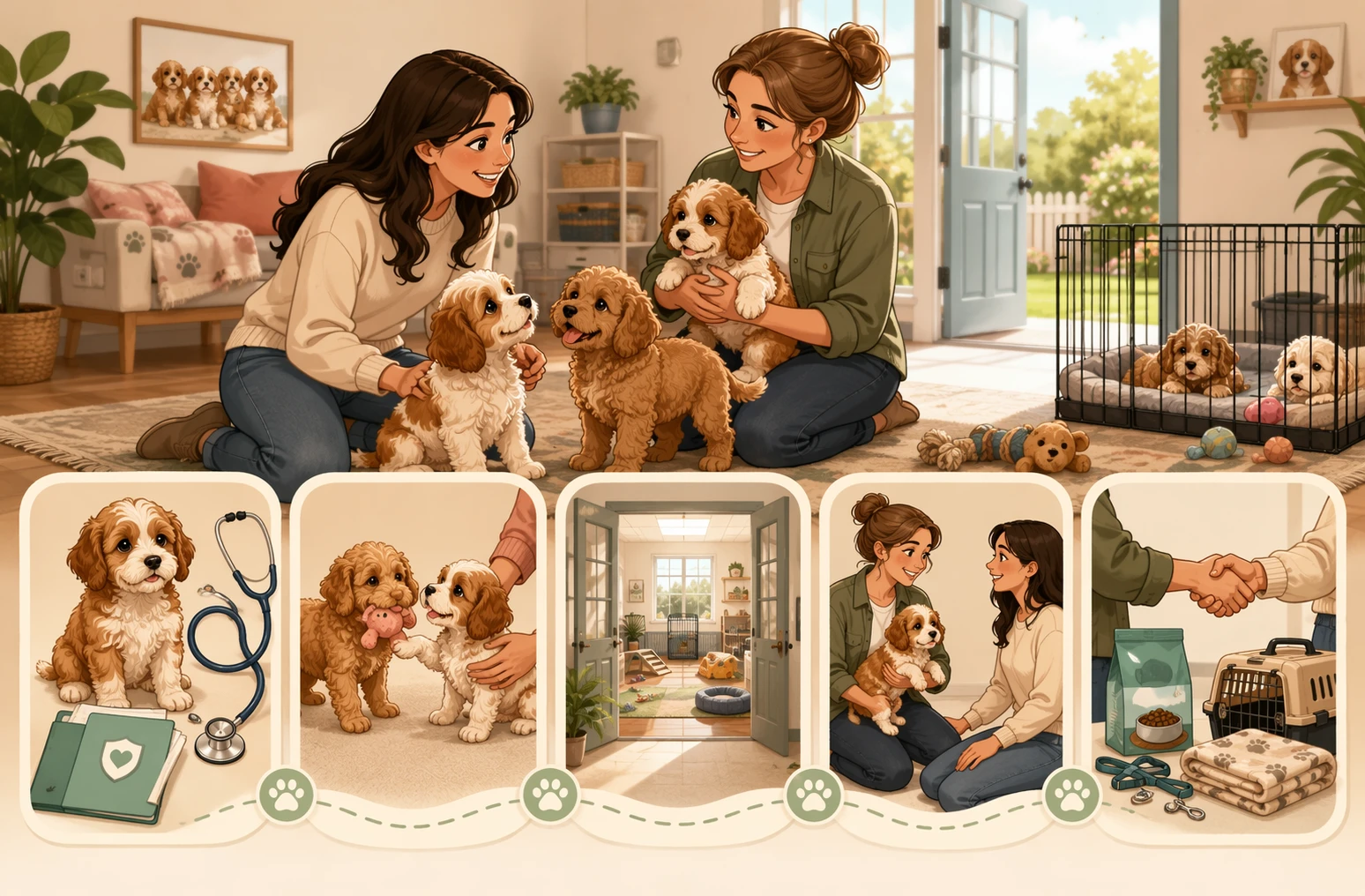
Watch for patterns in the breeder’s communication
Good breeders sound clear, calm, and consistent. They answer direct questions with direct answers. They also ask you questions back.
Watch for green flags:
- They explain parent temperaments in plain language.
- They share records before you send money.
- They tell you what they do not know yet.
- They talk about fit, not pressure.
Watch for warning signs:
- Fast sales pressure
- Avoiding live calls or video
- Vague answers about parents or home setup
- Pushing deposits before records
- Changing details from one message to the next
The ASPCA says responsible breeders are transparent, provide complete history, and place dogs thoughtfully in its breeding criteria.
One odd message is not always a deal breaker. A pattern of dodging, rushing, or sidestepping usually is.
Decide when a litter is the right match
Do not shortlist a litter just because it is nearby. Shortlist it when the full picture lines up.
Use this quick rule:
- Keep litters with strong scores and clear answers.
- Pause litters with one weak area you can verify.
- Cut litters with missing records, pressure, or poor fit.
The right litter usually feels steady, not frantic. You can explain why it made your list in one sentence: healthy parents, good early handling, clear records, and a breeder who still sounds helpful after the deposit question. If you are comparing Utah and out-of-state options, this method works for both. Breeders like Sage Puppies should be easy to score because the process, communication, and support stay clear from first inquiry to go-home day.
If you want a Cavapoo litter you can compare with confidence, start with a program that shows its work. Sage Puppies gives qualified families health-testing details, home-raised socialization, and a clear, family-first process from South Jordan, Utah to nationwide delivery. Review available puppies, pricing, and next steps, then apply when the right fit feels clear.
Frequently Asked Questions
Q1: Cavapoo puppies for sale near me
Start with breeders within driving distance, then compare each litter by parent health testing, early social time, home environment, size range, and go-home support. Local is helpful, but a better-raised puppy from a transparent program is usually the smarter choice.
Q2: How do I compare two Cavapoo litters fast?
Use a simple checklist:
- health testing shown
- parent temperaments described
- clear pricing and timeline
- clean, home-raised setup
- support after pickup
A breeder who answers direct questions clearly often stands out fast.
Q3: What matters more, color or temperament?
Temperament wins every time. Color does not tell you how a puppy will handle kids, noise, training, or change. Pick the litter with steady parents, thoughtful social work, and honest matching help, then choose your favorite look.
Q4: Is local pickup better than delivery?
Not always. Good delivery can work well if the breeder prepares the puppy carefully and explains the process clearly. Sage Puppies serves Utah families and nationwide buyers, so focus on communication, timing, and puppy readiness, not distance alone.
Q5: What should I ask before placing a deposit?
Ask for:
- parent health testing
- estimated adult size
- socialization plan
- go-home date
- what is included
- pickup or delivery details
If answers feel vague, keep looking.
Conclusion
Comparing Cavapoo litters gets simpler when you ignore hype and score what matters. Look at parent health testing, puppy temperament, daily raising conditions, breeder honesty, and go-home support. A cute coat or fast pickup should never outrank clear records and a good match.
For local and long-distance buyers, breeder rules and care standards still matter. USDA guidance makes clear that some sight-unseen sellers may need federal licensing, and current APHIS review shows growing focus on breeder dog care, exercise, and socialization USDA breeder licensing guidance and APHIS proposed rule review.
The best litter is not the closest one. It is the one backed by proof, thoughtful matching, and steady support after your puppy comes home.