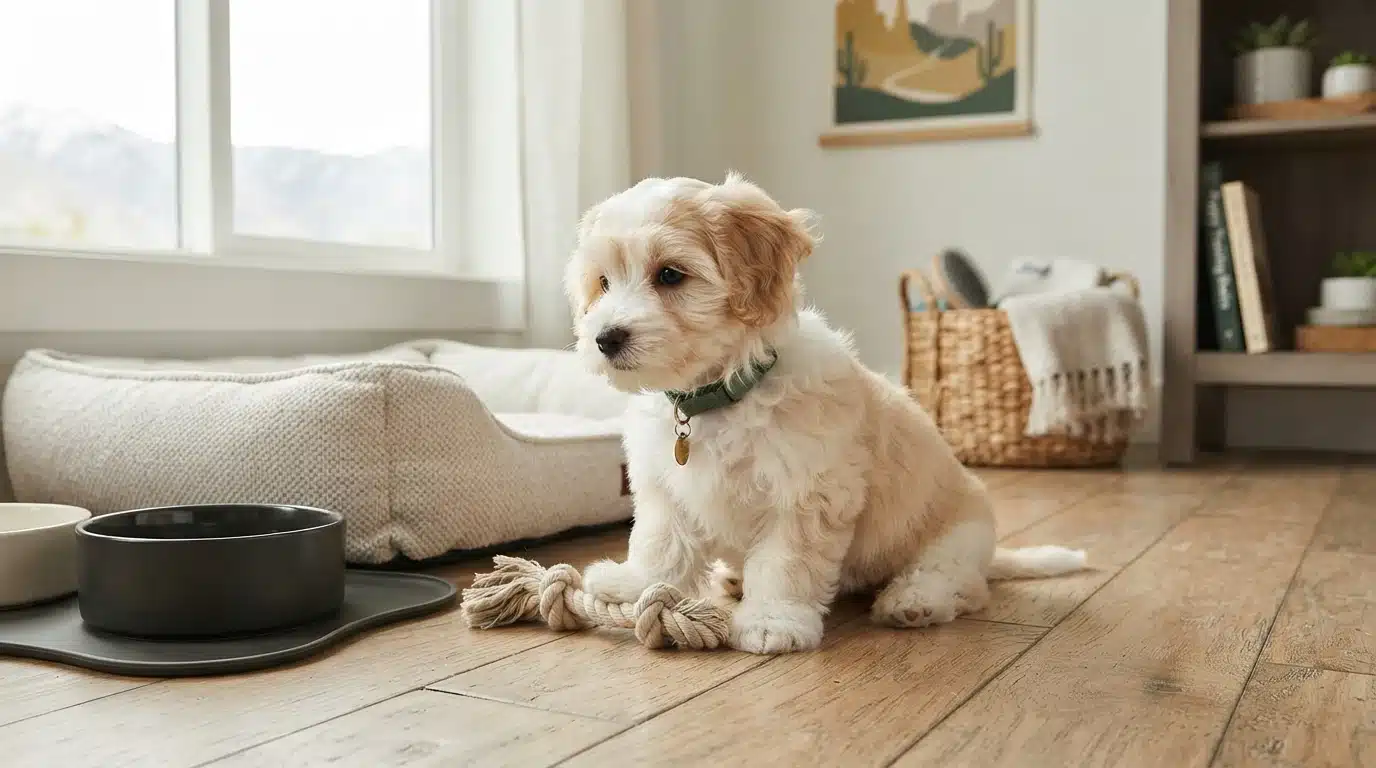
Quick Summary: Cavapoo grooming starts with reading your puppy’s coat type, since curly, wavy, and straight coats each need different brushing schedules. Brush before every bath, focus on friction zones behind the ears and in the armpits, and expect daily brushing during the four-to-eight-month coat change when loose puppy fur tangles against the new adult coat. Book the first professional groom between 12 and 16 weeks after vaccines, avoid human shampoo, and work mats out gently instead of cutting them. Sage Puppies raises well-bred Cavapoos and supports new owners with straightforward guidance from the first grooming session onward.
Here’s the surprise most first-time owners don’t see coming: your Cavapoo’s coat will change shape on you, usually somewhere between four and eight months. The soft puppy fluff falls out, the adult coat grows in, and the brushing habits you build before that swap decide whether the next ten years feel easy or feel like a constant fight with mats.
That change is the whole reason this guide exists. Good Cavapoo grooming isn’t one fixed routine, because your puppy’s coat type, curl and density shift as it grows, and each stage needs something a little different.
In this guide, you’ll learn to read your own dog’s coat, set up a simple weekly routine, handle bath time, trims and tear stains, and adjust everything when the adult coat arrives. The advice draws on years of raising Cavapoo puppies and walking new families through exactly this change, so you can start confident instead of guessing.
Step 1: Read Your Cavapoo’s Coat Type Before You Touch It
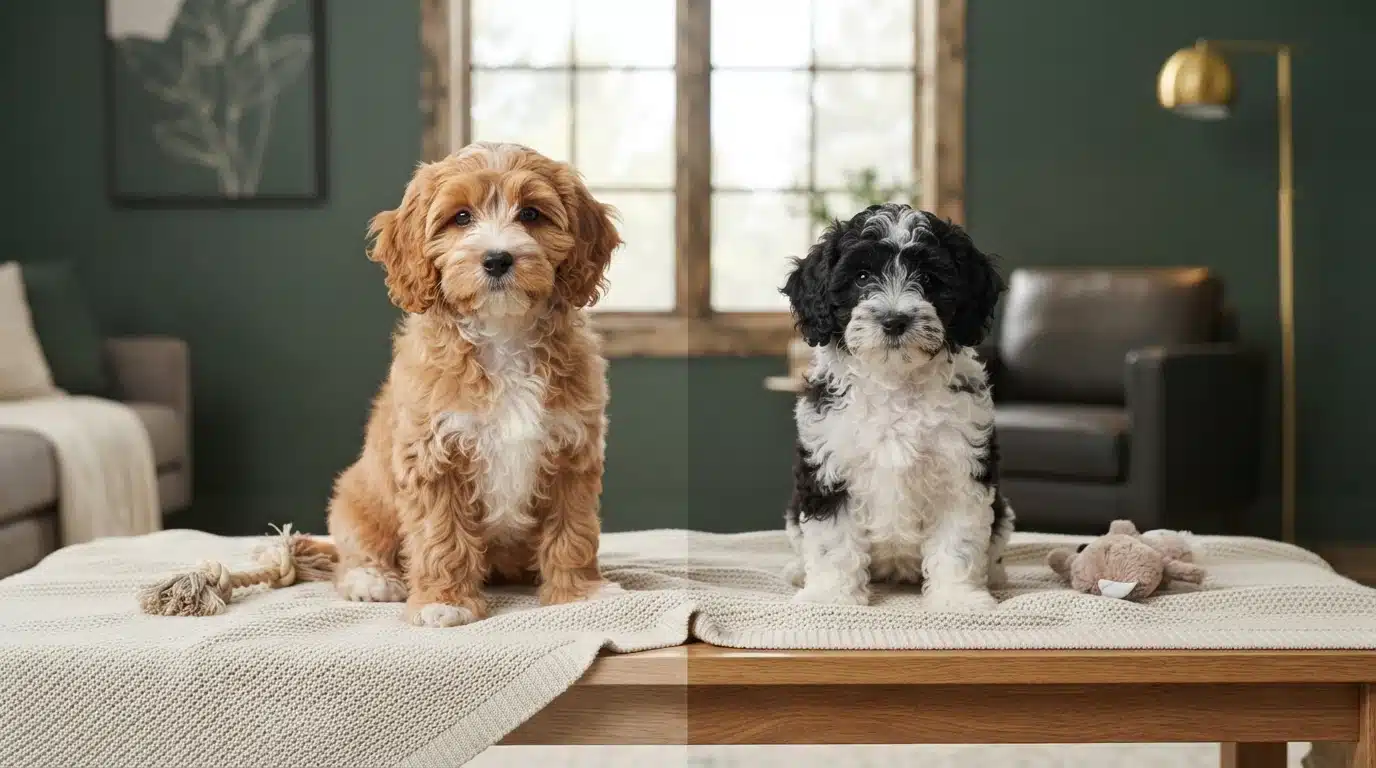
Every Cavapoo grooming routine starts with the same question: what kind of coat are you actually holding? The breed blends the Cavalier King Charles Spaniel’s silky coat with the Poodle’s curls, and the mix can land anywhere between them. Two pups from the same litter can need different brushes, different schedules, and a different clipping rhythm. Run this quick check before your first session so you buy the right tools instead of guessing.
Curl, Wave, or Straight: A Quick At-Home Check
Lift a section of fur from your puppy’s back and let it fall. Then look, and feel.
| Coat | What you’ll see | What it means for grooming |
|---|---|---|
| Curly | Tight loops like a poodle | Mats fastest; needs brushing every day and clips every 6-8 weeks |
| Wavy | Loose S-shaped waves | The most common Cavapoo coat; brush 2-3 times a week |
| Straight | Silky and flat like a Cavalier | Sheds a bit more; mats less around the ears and tail |
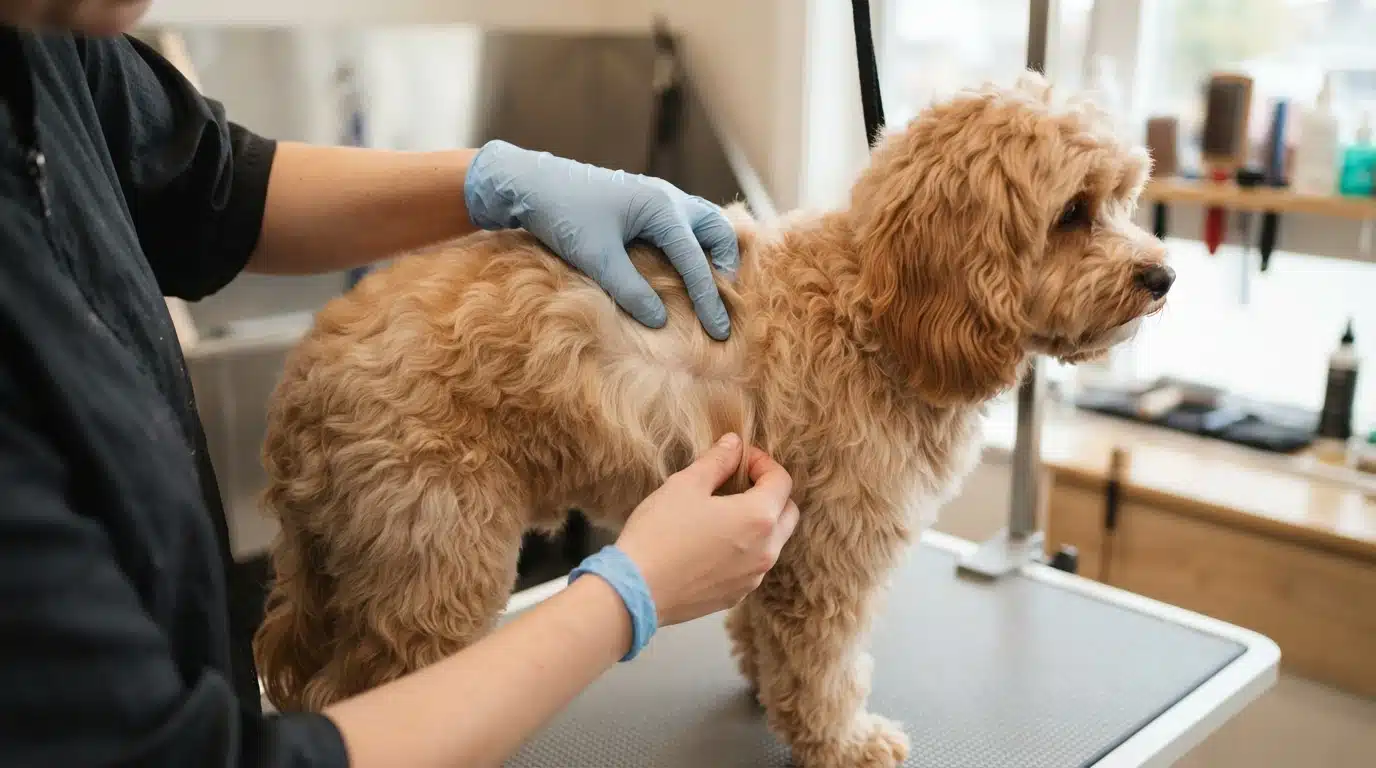
Press your fingers into the coat down to the skin. If the fur feels dense and soft underneath, tangles will start there first, so a slicker brush needs to reach the base, not just glide over the top.
Tip: Check behind the ears, inside the armpits, and under the collar. Those three spots mat before anywhere else.
Curly-coated owners should also brush the whole coat down to the skin before any bath, since wet mats tighten like felt.
Why the Puppy Coat Is Not the Adult Coat
Here’s the part that surprises first-time owners: the soft puppy coat starts falling out somewhere between four and eight months of age. During that change, your pup’s fur may look thinner, patchy, or strangely fluffy all at once. This is normal.
The problem is timing. A brush that suited your eight-week-old puppy may now tug as the coarser adult coat grows in. Mats form faster during the change because the loose puppy fur gets trapped in the new coat instead of falling away.
So expect to brush more often during those months, not less. Read the coat again around the six-month mark, because the texture you found at eight weeks may not describe the adult dog you’ll groom for the next 15 years. For how the coat affects shedding and allergies, see our Cavapoo coat guide.
Step 2: Build the Daily Brushing Habit (the Routine That Does the Real Work)
Brushing is where Cavapoo grooming is won or lost. Two minutes of brushing after dinner prevents the hour-long dematting session your groomer will otherwise charge you for. Keep the session short, calm and tied to something that happens every day anyway.
Line Brushing, Layer by Layer
Don’t just skim the surface. Line brushing means lifting one row of hair and brushing the coat beneath it in small sections, working from the legs upward. Spray a light detangler first, brush with a slicker, then finish each line with a metal comb. If the comb glides through, move on. If it snags, go back to that spot.
The Five Hot Spots Where Mats Start
Mats form where hair rubs together, and friction zones are predictable. Groomers consistently find them in the same five places: behind the ears, in the armpits, along the collar line, at the tail base and inside the thighs, while the back stays mostly clear source: groomer’s guidance on friction zones. Spend your last thirty seconds on those five spots every single time.
What a Small Mat Looks Like (and When to Stop Picking)
Run the comb behind each ear. A small mat feels like a fuzzy clump that the comb won’t pass through. If it’s loose enough to separate with your fingers, work it apart gently and brush it out. If it sits tight against the skin, stop. Picking at it hurts, and a groomer can shave it out safely.
Brushing Through the Coat Change
Between four and eight months, your puppy swaps its soft puppy coat for a denser adult one, and shedding undercoat tangles against the new hair. Expect mats to appear almost overnight during this stretch. Step up to daily brushing even on a wavy coat that previously needed two or three sessions a week, and check the ears and armpits twice a day if you can.
Step 3: Bathe Without Stripping the Coat
A clean coat dries fluffy and tangle-free, but a rushed bath does the opposite. Bathing a matted Cavapoo tightens every knot, so the wash only works when the prep is done first.
Pre-Bath Brushing (Never Skip This)
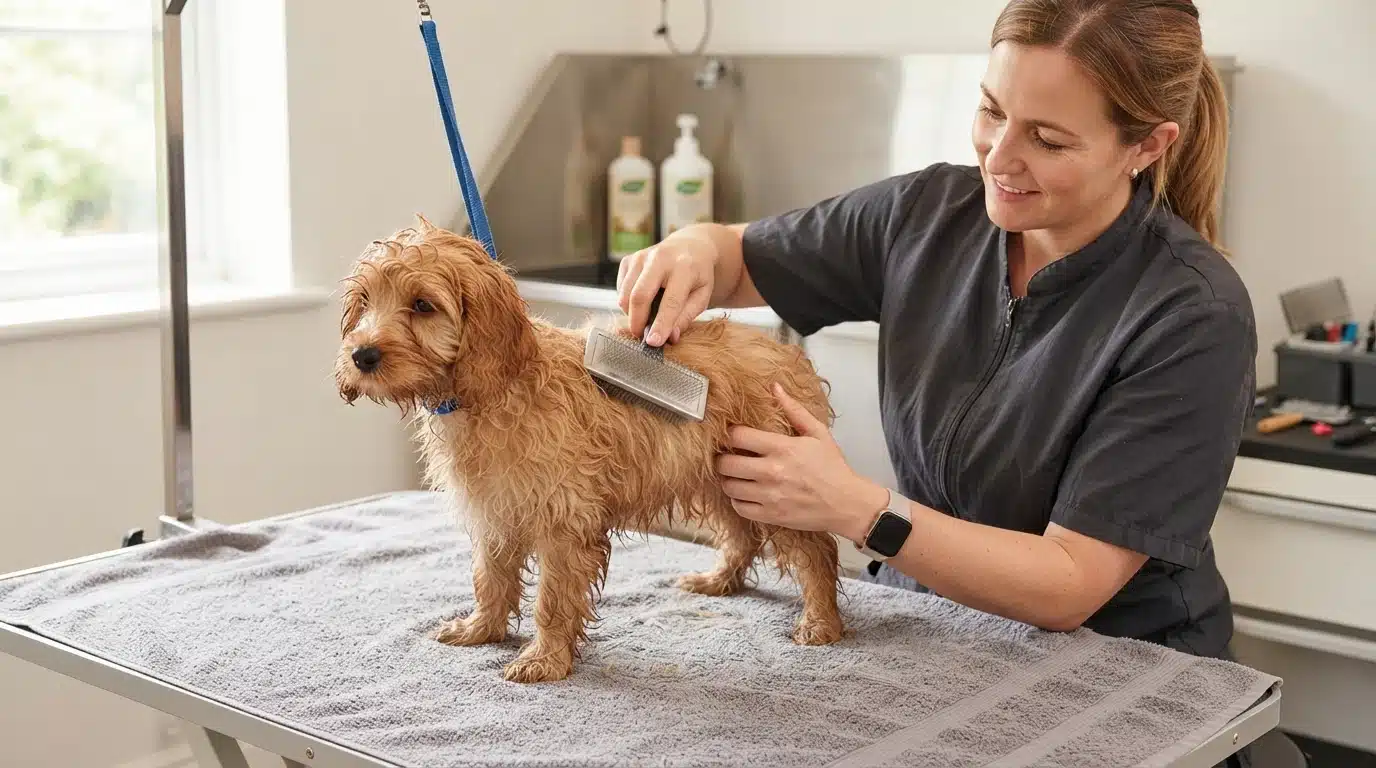
Brush the whole coat before water touches it. Mats swell and lock when wet, and they become nearly impossible to brush out afterward. Work through the legs, chest, and behind the ears with your slicker, then run a steel comb through to catch anything hiding near the skin. If you hit a knot, work it out now with your fingers and the comb.
Shampoo, Conditioner, and Water Temperature
Use lukewarm water, roughly what feels neutral on your inner wrist. Hot water irritates puppy skin and encourages scratching. Pick a gentle dog shampoo made for sensitive skin, and always follow with conditioner, because it smooths the hair shaft so tangles release instead of grabbing. Lather twice on dirty coats, rinse until the water runs clear, and keep suds away from the eyes and ears.
Drying Without Creating New Tangles
Squeeze water out with a towel first; rubbing scrubs knots into the coat. Then dry on low heat or the cool setting while brushing gently in the direction the hair grows. A coat left to air dry on its own curls and clumps, so keep the brush moving until the hair is fully dry.
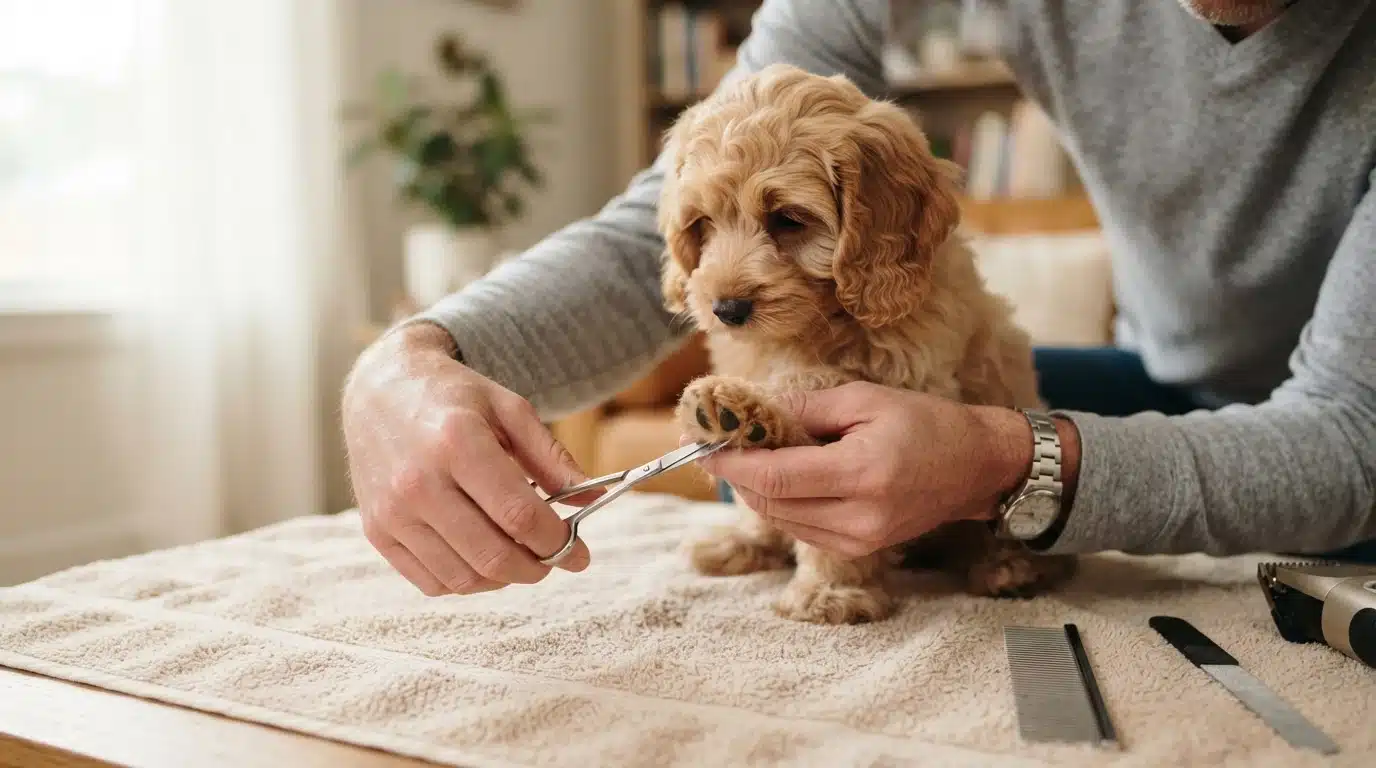
Step 4: Hygiene Trims You Can Do at Home (Eyes, Ears, Nails, Paws, Paws, Sanitary)
Hygiene trims are the small jobs that keep a Cavapoo comfortable between full grooms. You need clippers or small scissors, a gentle comb, and a steady hand.
Eye Area and Tear-Stain Wipe-Down
Wipe under the eyes daily with a damp cloth or a vet-approved tear-stain wipe. Trim the hair that pokes toward the eye with blunt-nosed scissors, pointing the tips outward. If staining is heavy or the eye looks red, call your vet before trying any product.
Ear Cleaning Without Damaging the Canal
Cavapoos grow hair inside their ears, which traps wax and moisture. Lift the flap, squirt in a vet-approved ear cleaner, massage the base for ten seconds, then let your puppy shake. Wipe only the outer folds with cotton. Never push cotton swabs into the canal.
Nail Trims Every 3-4 Weeks
Trim every 3-4 weeks, taking off tiny slivers with each session. Watch for the pink quick inside light nails and stop well before it. If you nick it, press on styptic powder or cornstarch to stop the bleeding. Handle paws daily as a puppy so trims stay calm.
Paw Pads and Sanitary Trim
Hair between the pads makes slippery floors worse and holds mud, so clip it level with the pads. For the sanitary trim, use clippers with a guard and keep the skin taut. If your puppy wiggles hard, stop and finish another day rather than risk a nick.
Step 5: Pick a Haircut and a Groomer (the Two Decisions Most Owners Get Wrong)
Most Cavapoo grooming mistakes start here. Owners ask for a cut their coat can’t support, or hand their puppy to the first shop with an open slot.
Teddy Bear, Puppy, Lamb, Summer, or Natural: What Each Cut Really Means
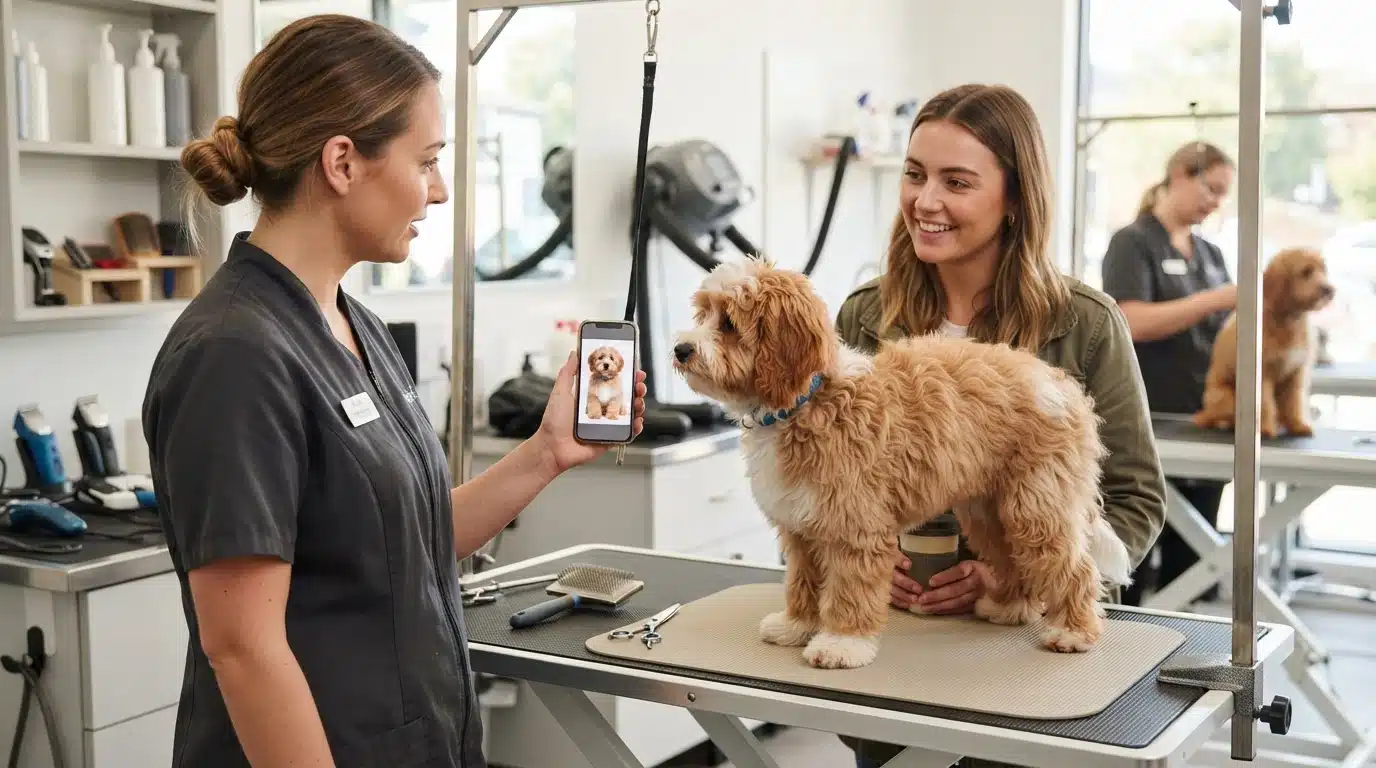
These names aren’t standardized, so bring a photo. A teddy bear cut leaves a round face and about an inch of body hair. The puppy cut is shorter and even all over, which makes brushing easier. Lamb and summer cuts go shorter for warm weather, while a natural look keeps the longer coat and demands daily brushing. Match the cut to your dog’s coat texture, not a picture you liked online.
When to Book the First Professional Visit
Book around 12 to 16 weeks, after your vet confirms the vaccine series is underway. Many salons require at least two sets of puppy shots before admitting a dog, and rabies once the age allows, as PetCo’s grooming vaccine guide explains. Ask for a short “puppy intro” first: a bath, trim, and lots of handling.
How to Vet a Groomer Without Standing in the Shop
Call and ask three things. Do they groom doodles weekly? Can your puppy take breaks? Will they stop and call you if they find mats? A good shop answers plainly and welcomes a short first visit.
What a Good First Groom Looks Like
Expect a bath, face and paw tidy, nail trim, and a light body clip. It should take under two hours, and your puppy should come home relaxed, not shaved to the skin. If the groomer removed more than you asked, find someone gentler next time.
Step 6: Handle and Desensitize So Grooming Stays Stress-Free
First Two Weeks Home: Touch, Then Tools
Spend the first two weeks touching your puppy all over. Rub ears, paws, belly, tail and muzzle for a minute or two each day. When he settles during a touch, mark it with a treat. Once handling feels normal, let him sniff and hear the brush running before you touch it to his coat. Keep sessions under five minutes.
Pairing Tools With Rewards (Short, Predictable Sessions)
Now add tools, one at a time. Brush two strokes, treat, repeat. Turn the clippers on across the room, then feed. The formula is simple: predictability plus food. A first-time owner routine works best when the same person runs the same sequence at the same spot every day, because dogs relax with repetition. Our socialization guide covers this pairing method in more depth.
Reading Stress Signals So You Can Pause
Learn your puppy’s early signals: lip licking, yawning, turning away or a shake-off mid-session. These mean he is over threshold, so back up a step and lower the intensity, advice echoed in Best Friends Animal Society’s handling guide. Struggling or freezing is a later stage. Pause before that point, end on an easy win and try again tomorrow.
Common Mistakes to Avoid
Skipping Brushing Between Professional Visits
A pro groomer every six weeks cannot undo six weeks of neglect. Mats form at the skin, where clips and collars rub, and they grow fast on a wavy or curly coat. Even a low-shedding Cavapoo needs brushing at home, so keep up the 2-3 times a week routine between appointments. A slicker brush plus a steel comb picks up what the groomer leaves behind.
Using Human Shampoo or DIY Detanglers
Human shampoo is made for skin that sits at a different pH than a dog’s. Used on your Cavapoo, it strips natural oils and can lead to flaking, dryness and infection, as PetMD explains. Homemade mixes of conditioner, oil or fabric softener are worse; they coat the hair and pull mats tighter. Buy a shampoo made for dogs and dilute it as the label directs.
Cutting Out Mats Instead of Working Them Out
Reach for scissors near the skin and you risk a nick that turns into a vet visit. Working a mat out is safer: hold the base of the mat so you don’t tug the skin, then split it with your fingers and pick it apart with a comb. If a mat sits tight against the skin or your puppy wiggles too much, let a groomer shave it instead.
Choosing a Groomer by Price Alone
The cheapest clipper job often means one fast shave-down, not careful line brushing. Ask how they handle first visits and whether you can stay for part of the session. Any groomer who welcomes a wiggly puppy and answers questions is worth a few dollars more.

Grooming a Cavapoo gets easier once the routine fits your puppy’s coat. Keep the brushing schedule, watch the coat change near six months, and you’ll avoid most mats before they start. Want a puppy worth grooming? Sage Puppies raises well-bred Cavapoos with honest guidance from day one. Visit us to start your application.
Frequently Asked Questions
Q1: Complete Cavapoo grooming guide for new owners
Read your puppy’s coat first, then brush with a slicker and comb, bathe with dog shampoo, and book a professional groom around 12 to 16 weeks.
Q2: How often should I brush my Cavapoo?
Wavy coats need brushing two to three times a week. Curly coats need daily sessions. During the four-to-eight-month coat change, brush every day.
Q3: When should a Cavapoo get its first haircut?
Book a gentle puppy intro between 12 and 16 weeks, once your vet confirms the vaccine series is underway and the salon’s shot requirements are met.
Q4: Can I use human shampoo on my Cavapoo?
No. Dog skin has a different pH, so human shampoo dries and irritates it. Use a gentle dog shampoo, then conditioner.
Q5: How do I remove mats safely?
Hold the mat’s base, split it with fingers, and comb it out. Mats tight against the skin belong with a groomer.
Q6: How often do Cavapoos need professional grooming?
Plan on a full groom every six to eight weeks, with home brushing keeping the coat mat-free between visits.
Conclusion
Cavapoo grooming comes down to a few habits that hold steady through every stage. Read your puppy’s coat before buying tools, brush with a slicker and metal comb in the friction zones, and always brush before a bath so mats don’t lock in. Plan hygiene trims every few weeks, and book that first professional groom between 12 and 16 weeks with a gentle puppy intro.
The one variable you can’t fully plan for is the coat change between four and eight months. Loose puppy fur tangles against the incoming adult coat, so brush daily during that stretch and re-read your dog’s coat near six months. Adjust the routine to the coat in front of you, and the work stays small for years.