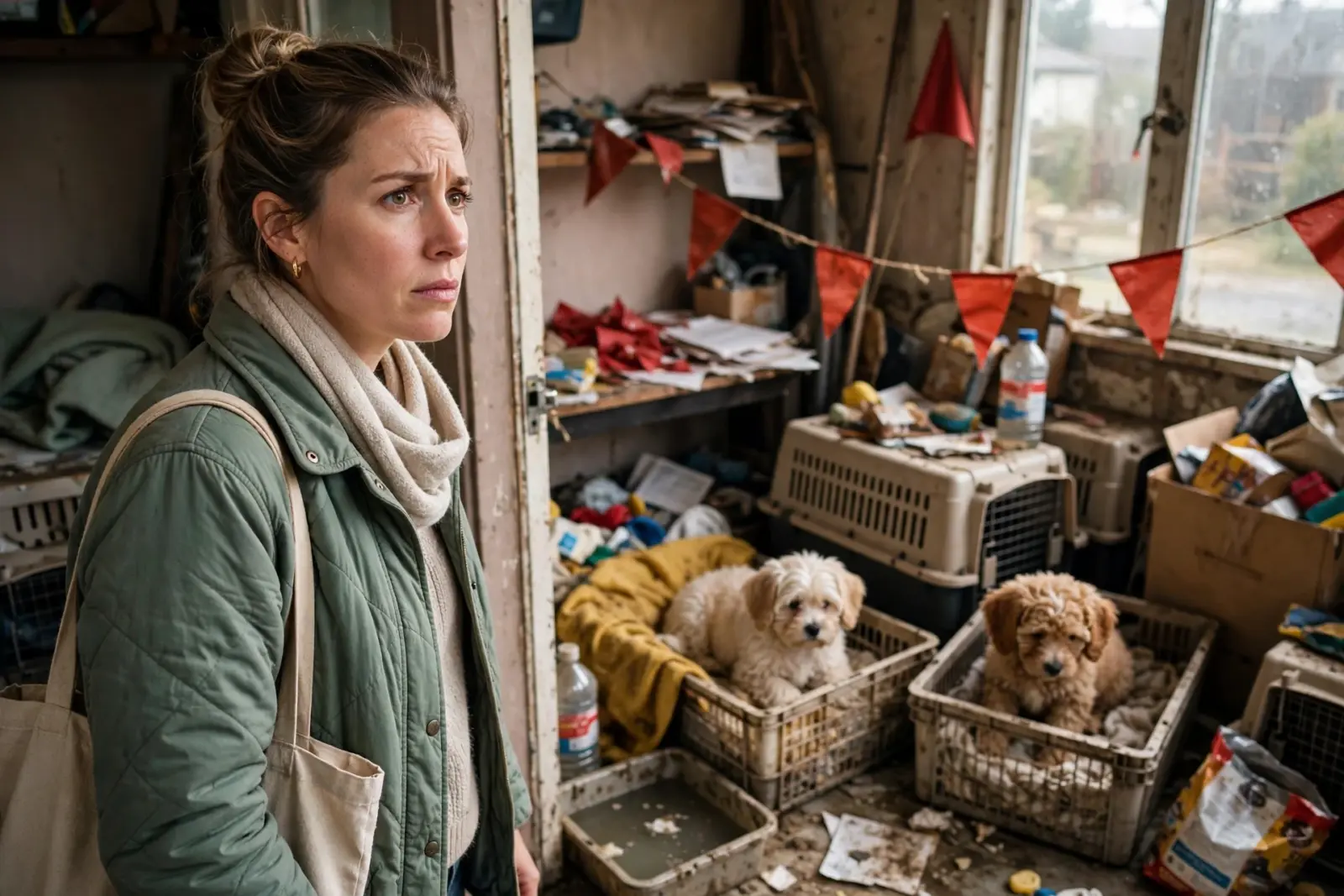
Quick Summary: Utah has no statewide puppy breeder license, so verify local kennel permits, business registration, and a USDA license only when federal thresholds apply. Check both parents independently in the OFA and CHIC databases, review the puppy’s vet exam, DNA results, and written contract, then visit the home or take a live video tour and call past buyers. Refusing verification, demanding untraceable payment, or pressuring an immediate decision are major warning signs; Sage Puppies welcomes families to apply these same checks to its Havanese, Havapoo, and Cavapoo program.
How do you know if a puppy breeder in Utah is legitimate? Run a six-step check: confirm licensing where it actually exists, verify the kennel address, look up parent health records in OFA and CHIC, read the puppy’s vet exam paperwork, review the purchase contract, and pressure-test the seller with direct questions. Licensed puppy breeder verification starts with knowing which licenses are real, because a Utah listing promising a “licensed” Havapoo litter should make you pause. Utah does not license dog breeders at the state level. The 2023 bill that would have created a state permit, HB 359, never passed, and the 2024 animal care amendments cover only shelters, rescues and sanctuaries. So the credential that sounds most reassuring is one Utah cannot provide. That gap is also how to spot a fake puppy breeder early: anyone leaning on a nonexistent state license is selling trust, not proof. This guide shows how to check puppy breeder credentials that do exist, from local zoning rules to federal USDA thresholds. Sage Puppies raises Havanese, Havapoo and Cavapoo litters in South Jordan, and the same verification steps we walk families through apply to any breeder you consider.
Step 1: Check Utah and Federal Licensing Reality
Short answer: No. Utah does not require a state license to breed and sell puppies. The state has no statewide breeder license, no permit, and no breeder-specific care standards. Licensed puppy breeder verification in Utah therefore runs through city and county rules plus federal law, not a state registry.
| What to verify | Who issues it | Where to check |
|---|---|---|
| Kennel or fancier permit | Your city or county animal services | City code or local animal services office |
| Business registration | Utah Division of Corporations | Utah.gov business search |
| Federal USDA license | USDA Animal and Plant Health Inspection Service | USDA APHIS inspection reports |
Why Utah Has No Statewide Breeder License
Utah sits among the states with no kennel breeder licensing standards. A 2023 bill, HB 359, would have required a dog breeder permit from the state, but it never passed. So a breeder cannot hand you a Utah puppy breeder license, and anyone who claims one exists is wrong or misleading.
Verifying Local Kennel Permits and Zoning
Cities handle the rules instead. Salt Lake City, for example, requires dog breeders to hold a license from animal services on top of a kennel or fancier’s permit. Ask your breeder’s city or county directly, and confirm the address is zoned for keeping multiple dogs. For a licensed puppy breeder verification at the local level, a written permit number plus a call to that office settles it.
When a Federal USDA License Applies
Federal law kicks in above certain thresholds. Under the Animal Welfare Act rules, breeders with more than four breeding females who sell sight unseen or wholesale must hold a USDA license. You can search the USDA inspection database for violations. Small programs like Sage Puppies typically fall below these thresholds, so no federal license simply means the numbers are small, not that anything is hidden.
Step 2: Verify the Business Identity and Physical Operation
A real breeder can show you a real business and a real home for the dogs. This step confirms both before money moves.
Confirming Legal Business Name and Registration
Ask for the exact name the breeder operates under. In Utah, many small programs run as an LLC, so request the registered name and match it to the Utah Division of Corporations business search. The name on your contract, your payment receipt and the breeder’s website should all match. If a seller only offers a first name and a phone number, slow down. You need a paper trail if a dispute ever comes up.
What to Look For in a Live Video Tour
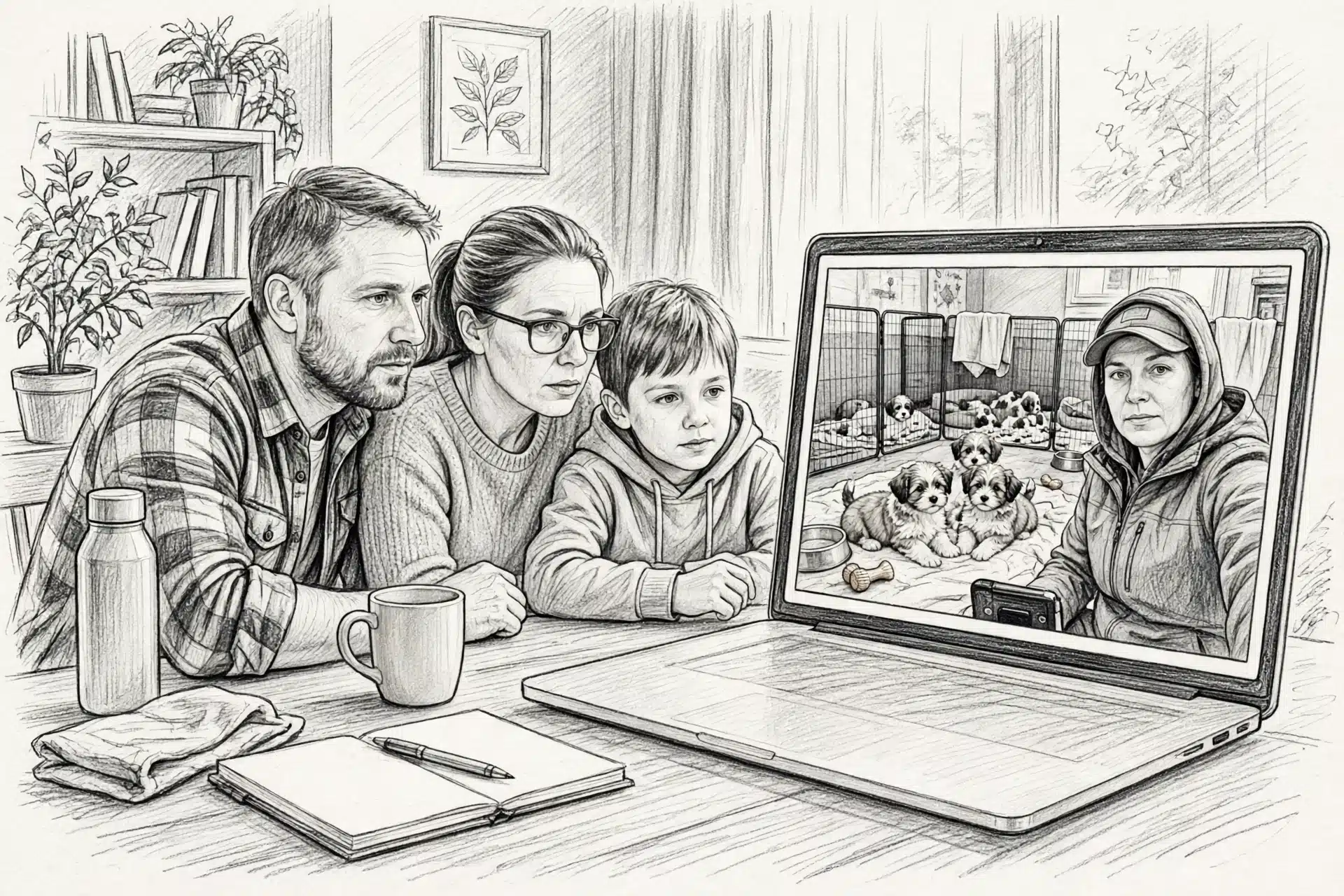
Insist on a live video call, not a recorded clip. Anyone can forward a video; only the person holding the phone controls a live one. Ask the breeder to walk through the space where puppies eat, sleep and play, and to pan across the mother dog. Watch for repeated background noise, different rooms between calls or excuses about timing. Some programs, including our own review of how the puppy matching process works, build live calls into the process, so treat it as a normal request, not a rude one.
Distinguishing a Breeder From a Reseller or Broker
A breeder owns the mother and raises the litter herself. A reseller buys puppies from elsewhere and ships them to you. Red flags: multiple breeds always available, no mother on camera, litters from “partners” and no history with the sire. Federal law requires USDA licensing for breeders above certain thresholds, but resellers often slip under it. Ask directly where the puppy was born and who cared for it in its first eight weeks. A straight answer names a place and a person.
Step 3: Verify Parent Health Testing and Pedigree Records
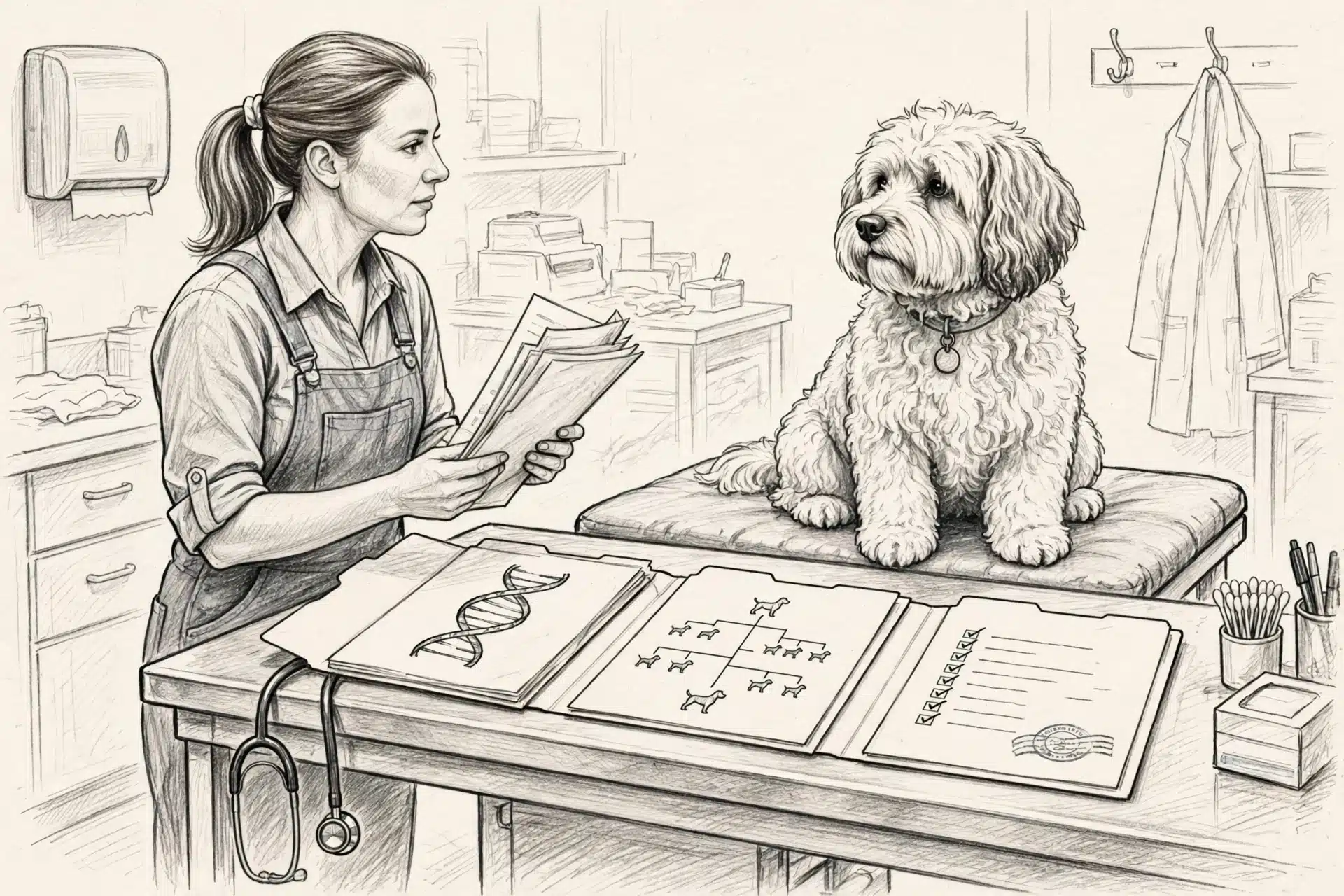
A serious breeder proves health claims with public records, not paperwork in a PDF. The Orthopedic Foundation for Animals (OFA) keeps an open database of hip, patella, eye, cardiac and hearing results, and its CHIC program collects a breed’s required tests under one number. You can search it all yourself in minutes on the OFA site.
Run the OFA and CHIC Searches Yourself
Ask the breeder for each parent’s registered name. Then go to ofa.org, use the free search, and type it in. A legitimate dog shows up with listed results and, if earned, a CHIC number. No record at all is a warning sign, because a breeder who paid for testing usually wants it visible.
Keeping Three Record Types Separate
Buyers often mix up different documents, so sort them into three groups.
| Record Type | What It Covers | What It Proves |
|---|---|---|
| Puppy exam record | This puppy’s vet check at 6-8 weeks | The pup looked healthy that day |
| Parent clinical screening | OFA eyes, hips, patellas, cardiac | The parents passed breed-relevant screens |
| DNA variant results | Genetic panel for inherited disease markers | Known gene risks were tested for |
The puppy’s own exam says nothing about inherited disease. Only parent screening and DNA results do.
A clean vet exam on the puppy is not the same as health-tested parents. Ask for all three record types, in writing.
For more on reading each one, our guide to parent screening and DNA tests walks through what each document should contain.
Breed-Specific Screening for Havanese, Havapoo and Cavapoo
For a Havanese parent, the Havanese Club of America lists eye, hip and patella screening as the core requirements, with cardiac evaluation also expected by the breed’s CHIC profile. Ask to see those results for both parents.
Havapoos and Cavapoos are crosses, so check both sides of the family. The Havanese parent needs the tests above; the Poodle or Cavalier parent needs its own breed’s screens. A breeder who tests only one parent leaves half the pedigree unverified, and that gap is exactly what you are paying a careful breeder to close.
Step 4: Review the Contract, Health Terms, and Payment Method
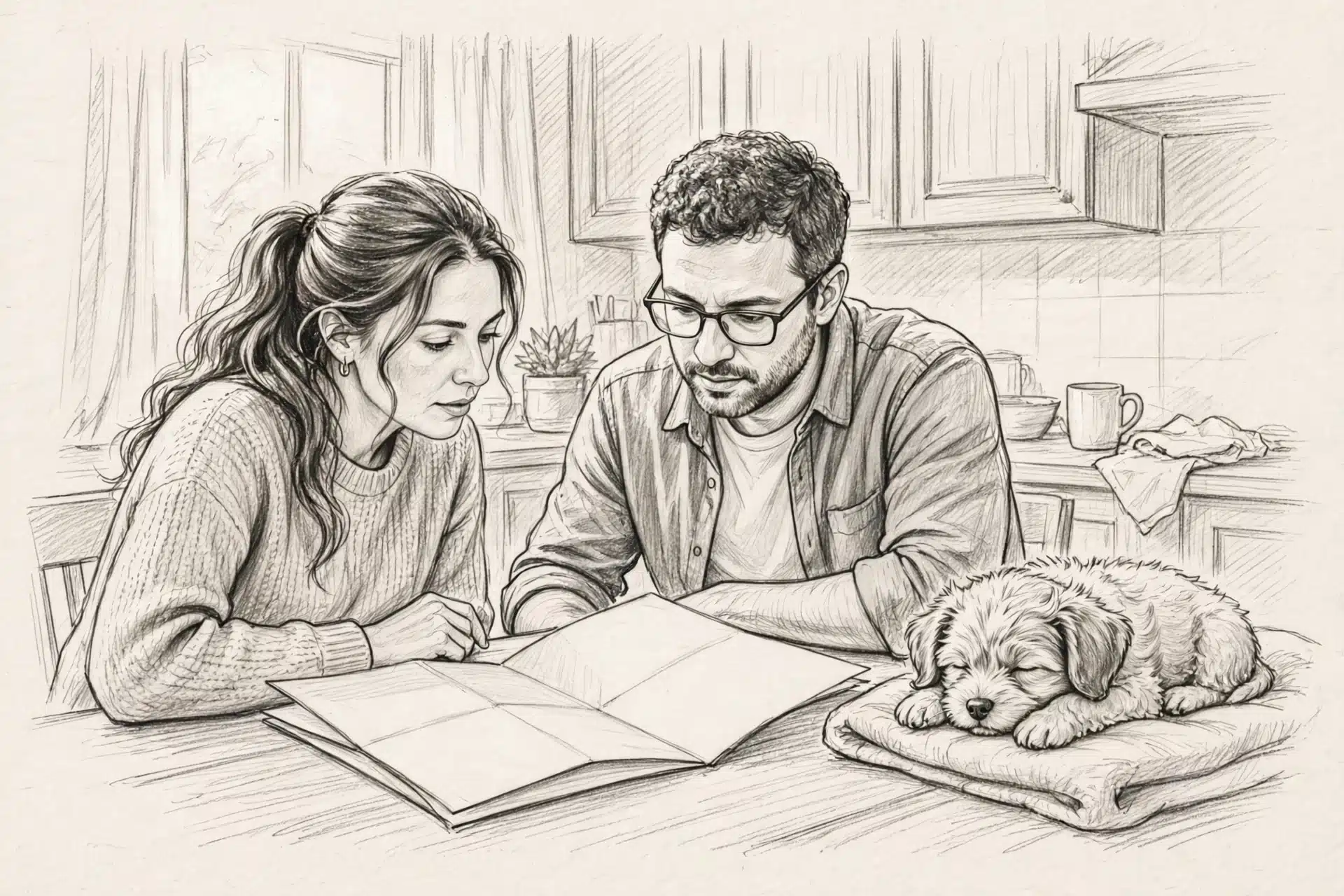
A good breeder hands you a written contract before money changes hands. Read it carefully, because its terms tell you whether the breeder stands behind the puppy or only wants your deposit.
Contract Terms That Show Accountability
Look for a return-to-breeder clause. This term requires you to give the dog back to the breeder if you ever cannot keep it, which shows the breeder cares where every puppy ends up. Also check for a health provision that spells out what happens if a vet finds a serious condition in the first days, and a requirement to spay or neuter rather than breed a companion pup. Vague terms, missing signatures, or no contract at all are reasons to walk away.
Paying Safely and Timing the Deposit
Pay with methods that leave a record, such as a credit card or a documented bank transfer. Wire transfers, gift cards, and payment apps with no buyer protection make refunds nearly impossible if the deal goes bad. Ask exactly when the deposit becomes nonrefundable and what happens if the litter is smaller than expected or a puppy is not available. Get the answer in writing.
Questions to Ask Before You Deposit
Before you commit, ask these directly:
- Will you send the contract so I can read it before paying?
- What health conditions does your guarantee cover, and for how long?
- Can I see the parents’ OFA and CHIC results?
- When and how will the puppy’s vet exam happen?
- What is your refund policy if I change my mind?
Straight answers, given without pushback, signal a breeder worth trusting.
Step 5: Evaluate the Visit, Pups, and Parent Temperament
What a Healthy, Socialized Litter Looks Like
Look for bright eyes, clean coats, and steady movement. Puppies should tumble, chase, and handle being held without panicking or freezing. A good litter is curious about people, not cowering in a corner or barking nonstop. Noses and bottoms should be clean, and no pup should seem limp, bloated, or left behind by its littermates.

Observing the Dam and the Breeder’s Handling
Watch how the mother greets strangers. She should be friendly and relaxed, because temperament is partly inherited. Ask to see her interact with the litter. The breeder’s handling matters too: pups raised in a home, touched daily, and introduced to normal household sounds adapt far faster. A breeder who handles pups gently and talks through what she does is showing you her process, not just her puppies.
Planning a Utah Pickup Visit
Aim to visit around five to six weeks, before your pickup date. Reputable Utah breeders welcome it, and one of the smartest moves is bringing a short list of questions to ask before you visit. Note cleanliness, food quality, and how many litters share the space. If distance makes travel hard, ask for a live video walkthrough of the whelping area instead.
Step 6: Verify References, Reviews, and Warning Signs
References and reviews reveal what licensing records cannot. This step also shows you how to spot a fake puppy breeder before money changes hands.
Talking to Past Buyers
Ask the breeder for two or three families who bought a puppy in the last year. Call one or two. Good questions: Did the puppy match its photos and health records? Did the breeder answer questions after you took the puppy home? Would they buy again? Also read reviews off the breeder’s own site, since testimonials there can be handpicked. If a breeder refuses references entirely, ask why.
Red Flags That Appear in Utah Puppy Listings
Walk away from a listing when you see any of these signs:
- Payment by gift card, wire, or crypto. No buyer protection exists once you send it.
- No video visit before pickup or delivery. A real breeder will show you the puppy and its mother.
- Pressure to decide today. Scams rush you past basic checks.
- Shipped puppies “free” with money owed later. Extra transport fees are the classic second charge.
- Refuses to share vet records or parent health tests. Honest programs keep these on file.
Reporting Suspected Fraud or Welfare Issues
If you were scammed, file a complaint with the Utah Division of Consumer Protection, and report the seller to the FTC, which takes reports about scammers nationwide. For poor living conditions, contact local animal control where the puppies are kept. Keep screenshots of listings, emails, and payment receipts so investigators have evidence to work with.
Common Mistakes to Avoid When Vetting Utah Breeders
Expecting a Utah State License That Does Not Exist
Many buyers waste time searching for a “Utah puppy breeder license” and conclude a breeder is fake when nothing turns up. But no statewide breeder license exists in Utah, so the absence of one means nothing. Larger operations may hold a USDA license under the Animal Welfare Act, while small programs follow local kennel and zoning rules. Ask which rules apply and how the breeder complies.
Skipping Independent Record Verification
Taking a breeder’s word for health clearances is the costliest shortcut. Verify claims yourself by checking how to check puppy breeder credentials: look up parent dogs in the OFA and CHIC databases, confirm eye, hip and patella results, and ask for the puppy’s own exam record from a licensed vet. Reputable programs welcome this. When we place a puppy from Sage Puppies, records go with the application process, because a breeder who dodges verification is telling you something. That refusal is your clearest warning sign.
Matt Milar | Reviewed by Cassie Milar

You now know how to check licenses, health records and screening results before you pay a deposit. Use that same checklist on us. Sage Puppies welcomes your questions about our Havanese, Havapoo and Cavapoo program, so start with our application and see how a transparent breeder answers.
Frequently Asked Questions
Q1: How do I know if a puppy breeder in Utah is legitimate?
A legitimate Utah breeder verifies through local kennel permits, business registration, and federal USDA licensing when thresholds apply, since no Utah puppy breeder license exists at the state level. Ask for a permit number and call that city’s animal services office to confirm.
Q2: What red flags show a puppy listing is a scam or puppy mill?
Gift card, wire, or crypto payment requests; refusal of live video visits; pressure to decide today; multiple always-available breeds; and no mother on camera. Repeated litters from “partners” instead of an owned dam signal a reseller, not a breeder.
Q3: How can I check a puppy breeder’s health testing and pedigree records?
Ask for each parent’s registered name, then search the OFA database at ofa.org yourself. Look for hip, patella, eye, and cardiac results, plus a CHIC number when earned. Also request DNA variant results and the puppy’s own vet exam record separately.
Q4: When does a breeder need a USDA license?
Breeders with more than four breeding females who sell sight unseen or wholesale must hold a federal USDA license under Animal Welfare Act rules. Small home programs usually fall below that threshold, so no federal license alone means nothing bad.
Q5: How much should a deposit cost, and how should I pay it?
Deposits vary by program, so ask what happens if the litter is smaller than expected. Pay by credit card or documented bank transfer, and avoid payment apps with no buyer protection so a refund stays possible.
Q6: Can I visit a Utah breeder’s home before pickup?
Yes, and reputable breeders welcome visits around five to six weeks. Watch cleanliness, food quality, and how the mother greets strangers. If travel is hard, request a live video walkthrough of the whelping area instead of a recorded clip.
Conclusion
Verifying a Utah breeder comes down to six checks: confirm local kennel permits instead of a state license, because Utah has none; verify the business name and address; look up both parents in the OFA and CHIC databases yourself; read the puppy’s vet exam alongside parent screening and DNA results; review the contract for a return-to-breeder clause before paying; and call past buyers. A live video visit shows you the litter, the mother and how the breeder works. Refusals are the clearest warning sign. Run every question on this list with any breeder you consider, including us. A program with solid answers will welcome each one.